When Academic Progress Rules Put Financial Aid at Risk
New national research reveals how academic progress requirements affect 1.8 million college students—and what institutions can do to help.
Every year, students risk losing the financial aid they need to stay in college because of academic progress requirements that can be difficult to understand and navigate. A first-of-its-kind national study from Lumina Foundation and Mathematica reveals the scale of the issue and identifies opportunities for colleges to improve policies, communication, and student support.
The Research
Explore the research, key findings, and perspectives on how colleges can help more students maintain financial aid eligibility and stay on track toward a credential of value.
Mathematica Report
Satisfactory Academic Progress: What Students Experience
November 18, 2026
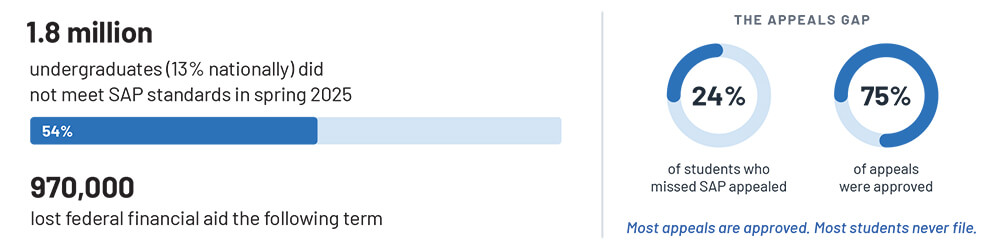
A new national evaluation estimates that 13% of undergraduates—more than 1.8 million students—failed SAP in the spring 2025 evaluation period. More than half of those students (54 percent, or approximately 970,000 students) lost eligibility for federal financial aid for the following term.
Federal rules set baseline requirements while giving institutions discretion in how they implement SAP. Yet most institutions are not taking advantage of the existing flexibility that could help students stay on track
Explore what happens when students fall short of academic standards with these interactive dashboards from Mathematica. Compare SAP outcomes across institution types, see how many students lose federal aid or successfully appeal, and model the interventions that can keep students on track. Use the filters to uncover patterns in policies, student experiences, and available supports.
Keeping financial aid involves more than completing the FAFSA. Students also must meet satisfactory academic progress requirements. New Mathematica research, funded by Lumina Foundation, examines how these requirements affect students and how colleges can better support them.
Satisfactory Academic Progress
Frequently asked questions
What is satisfactory academic progress?
“Satisfactory academic progress,” or SAP, is a set of requirements students must meet to keep receiving federal financial aid. Colleges check students’ grades, how much of their attempted coursework they complete, and whether they are on track to finish within the allowed time.
Who sets the requirements?
Federal rules require colleges to have an SAP policy and establish some basic requirements, while giving colleges flexibility in setting additional criteria and implementing their policies. Requirements and procedures can differ by school. Students can find their college’s policy on the college’s website or by asking the financial aid office.
Is SAP just about grades?
No. A student can have passing grades and still fall short of SAP requirements. Withdrawing from courses, for example, can affect the share of attempted coursework a student successfully completes.
What did the study find?
The study estimates that about 1.8 million undergraduates—13 percent nationally—did not meet SAP standards in spring 2025. About 970,000, or 54 percent of those students, lost federal financial aid the following term. The findings also reveal a gap in the use of appeals: only 24 percent of students who did not meet SAP standards appealed, even though about 75 percent of appeals were approved.
Which students were most affected?
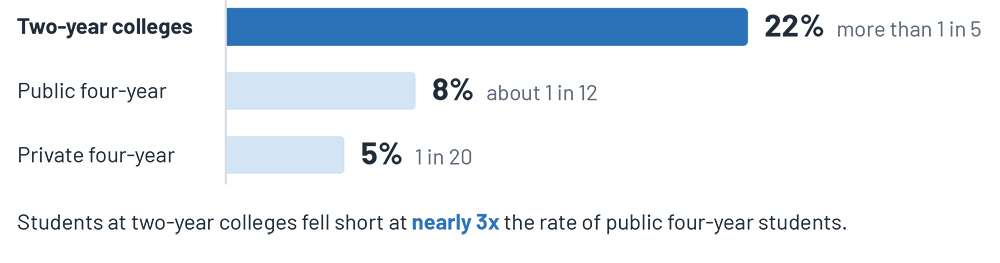
Students at two-year colleges were more likely to fall short of SAP standards. The study found rates of 22 percent at two-year colleges, compared with 8 percent at public four-year colleges and 5 percent at private four-year colleges.
These differences highlight the need to examine how policies and support systems work across different types of colleges.
Does falling short of SAP automatically mean losing aid?
Not always. Depending on the college’s policy and the student’s situation, a warning period or a successful appeal may allow aid to continue. Students should contact their financial aid office promptly to understand their status and options.
What is a SAP appeal?
An appeal asks a college to reconsider a decision that a student is ineligible for aid. It gives students an opportunity to explain circumstances that affected their progress, such as an illness or a death in the family, and what has changed to help them succeed.
Is academic probation the same as financial aid probation?
No. Academic standing and eligibility for financial aid are separate determinations. A student’s permission to remain enrolled does not necessarily mean their aid will continue. Students should check with both their academic advisor and financial aid office to understand their status.
What should students do if their aid is at risk?
Contact the financial aid office as soon as possible and ask:
Which SAP requirement did I miss?
Can I appeal, and what is the deadline?
What information do I need to submit?
What steps would allow me to keep or regain eligibility?
An academic advisor can also help students plan their coursework and connect with support.
What can colleges do to help?
Colleges can explain requirements earlier, tell students exactly why their aid is at risk, and make appeal instructions easier to find and follow. Better coordination between financial aid staff and academic advisors can help students receive consistent information. Colleges can also review whether they are using the flexibility federal rules allow, including progress standards that increase as students advance through their programs.
Does this research show that SAP causes students to leave college?
This study does not establish that SAP caused an individual student to leave. It documents how many students fall short of the requirements and subsequently lose aid. The findings identify opportunities to improve policies, communication, and support so students can understand their options and keep making progress.
Where can students learn more?
Start with your college’s financial aid office and its published SAP policy. Federal Student Aid also provides an overview of the requirements for keeping financial aid.
If we want more people to enroll, return, and complete bachelor’s degrees, we must pay attention to the policies that quietly force them out. A student’s hardest semester should not automatically become the end of their college story. SAP should be a signal to offer help—not a trapdoor that closes beneath a student who is still capable of finishing.
The Revolving Door
Janai Raphael, Lumina’s strategy officer for access, discusses maintaining meaningful academic standards while also giving students a shot to recover.