When Lumina Foundation launched the FutureReady States initiative earlier this year, we were eager to learn more about how states are shaping their short-term workforce credential programs to better serve adult learners. These programs are vital tools for expanding adults’ access to education and training beyond high school, thereby increasing their economic mobility.
More than 1 million short-term workforce credentialing programs are being offered today—through colleges and universities, technical schools, private training centers, and online. Unfortunately, little has been done to help adult learners identify the programs that meet industry standards and lead to higher-paying jobs.
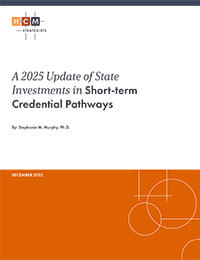
But that’s changing. Many states are now working to make short-term workforce credential options easier to navigate, assess, and pay for. New research shows states significantly increasing their investments in short-term workforce credential programs. According to the latest data—compiled by HCM Strategies in research funded by Lumina—34 states are funding 111 active initiatives at a total of $8.1 billion. That’s up from last year’s tally of 70 initiatives in 32 states totaling $5.6 billion.
Through the FutureReady States initiative, Lumina is supporting emerging efforts in 12 states to identify credentials of value and to build systems that help learners find the programs that can serve them best. The participating states are Alabama, Colorado, Connecticut, Illinois, Louisiana, Michigan, Mississippi, New Jersey, North Carolina, Tennessee, Texas, and Virginia.
While each state is tailoring its efforts to meet the specific needs of its own adult learners and industries, there are some common goals and challenges. These commonalities—issues related to policy, infrastructure, funding, and logistics—are fostering cooperation among the participants. As they reach out to peers to share strategies and lessons, the FutureReady States initiative aims to play a key role as a catalyst and a connector.
The appetite for collective learning and problem-solving fueled a two-day meeting of the FutureReady States in Nashville in mid-November. The event drew nearly 200 attendees, including state education and labor officials, higher education leaders, researchers, policy and advocacy organization staffers, and representatives of the five organizations that assist and support the participating states.
“This is about giving everybody an opportunity to have conversations that diffuse learning and inspire you to go back to your home base and move forward with the challenging work you are doing,” said Chauncy Lennon, vice president for learning and work at Lumina. “There’s a tremendous amount of innovation happening in states. We couldn’t be more excited about the opportunity to work with all of you in building the education and training system that meets the challenges of today’s economy and today’s learners.”
Over two days, participants discussed key issues related to short-term workforce credential systems and pathways, including:
Creating a common language: Given the vast number and range of workforce credentials available, it’s important for states to reach clear and shared definitions for key terms such as “quality” and “value” as they set goals and standards. If students are to navigate the array of offerings across industries and types of institutions, they need clear criteria for identifying the credentials that meet quality standards and will translate into well-paying jobs. Reaching a shared definition of success in short-term programs is also critical—and tricky. What success means to a state agency that’s setting policy and establishing processes is far different from what it means for a student who’s looking to build skills and land a good job.
Coordinating systems: Short-term programs are often seen as separate from traditional education—part of a fragmented system in which each unit operates in its own silo. Many states are working to address this problem by improving coordination and alignment of programs. These efforts have helped build and strengthen partnerships among a variety of government agencies and divisions, including some that had rarely worked together previously. Many states, for example, are creating working groups that include representatives from state education and labor departments, workforce-development entities, and area employers.
Improving data collection and sharing: Every FutureReady state recognizes the need for more and better data and consistent sharing of information across agencies and institutions, as well as between the public and private sectors. Robust, reliable data on short-term workforce credential programs are vital—for students, for institutions, for state officials, and for employers. This information is essential for assigning value to each program, tracking market needs, connecting learners with job opportunities, and ensuring the quality and relevance of offerings as workforce demands change. Policymakers and state leaders also need this data to make evidence-based decisions and invest in what works.
Addressing gaps, rewarding gains: Any strategy for expanding access to affordable, short-term education and training must include supports and services for adults who lack foundational skills in math, reading, and other areas. These supports should also be available to learners who bring prior learning—such as dual enrollment credits or workforce skills—that can be applied to program requirements.
Enhancing credentials’ ‘stackability’: The best credentials are “stackable,” meaning they align or can be combined with additional education and training. Ideally, stackable credentials help build a career pathway that leads to promotions, better jobs, and higher pay. Many states are grappling with how to connect and match credentials to enhance stackability and to help learners choose credential options that are part of robust pathways.
Improving employer engagement: State investments in short-term workforce credential programs aim to address key workforce gaps, but employers are not always effectively engaged to enhance the quality and relevance of such programs. They provide essential, real-world perspective on the knowledge and skills that learners need to land and succeed in a job. Recognizing employers’ unique role, states are increasingly eager to create enduring partnerships with industry so they can ensure the ongoing relevance and value of credentials in the marketplace.
Boosting programs’ affordability: States are finding ways to make post-high school credentials more affordable, including offering free or reduced-cost programs at community colleges and other institutions. Still, funding is an ongoing challenge across the country. Even where funding is committed and stable, better coordination is needed across state agencies and services to help learners obtain aid. The new federal Workforce Pell Grant, available after July 1 to students in short-term programs that meet certain criteria, could be a game-changer for adults seeking training. It will also serve as a mechanism for accountability because of its rigorous requirements for program completion, job placement, and “value-added earnings.”
As states wrestle with these issues, they should help professionalize higher education’s “non-credit” sector—an area that is growing in importance thanks to rapidly changing economic demands.
In the coming months, we at Lumina will share more about the FutureReady states’ efforts to craft short-term workforce credentialing strategies that address their needs while improving opportunities for adult learners. These efforts are important, not only to the participating states and the many thousands of students affected, but to the nation as a whole.
Increasing the number of Americans who hold short-term workforce credentials is a vital step in reaching the ambitious national goal that Lumina has embraced as its key aim: By 2040, 75 percent of adults in the U.S. labor force will hold a degree or credential of value leading to economic prosperity. We’re confident the FutureReady States initiative will help the nation reach that goal.
Follow the FutureReady States website to stay informed about the work.