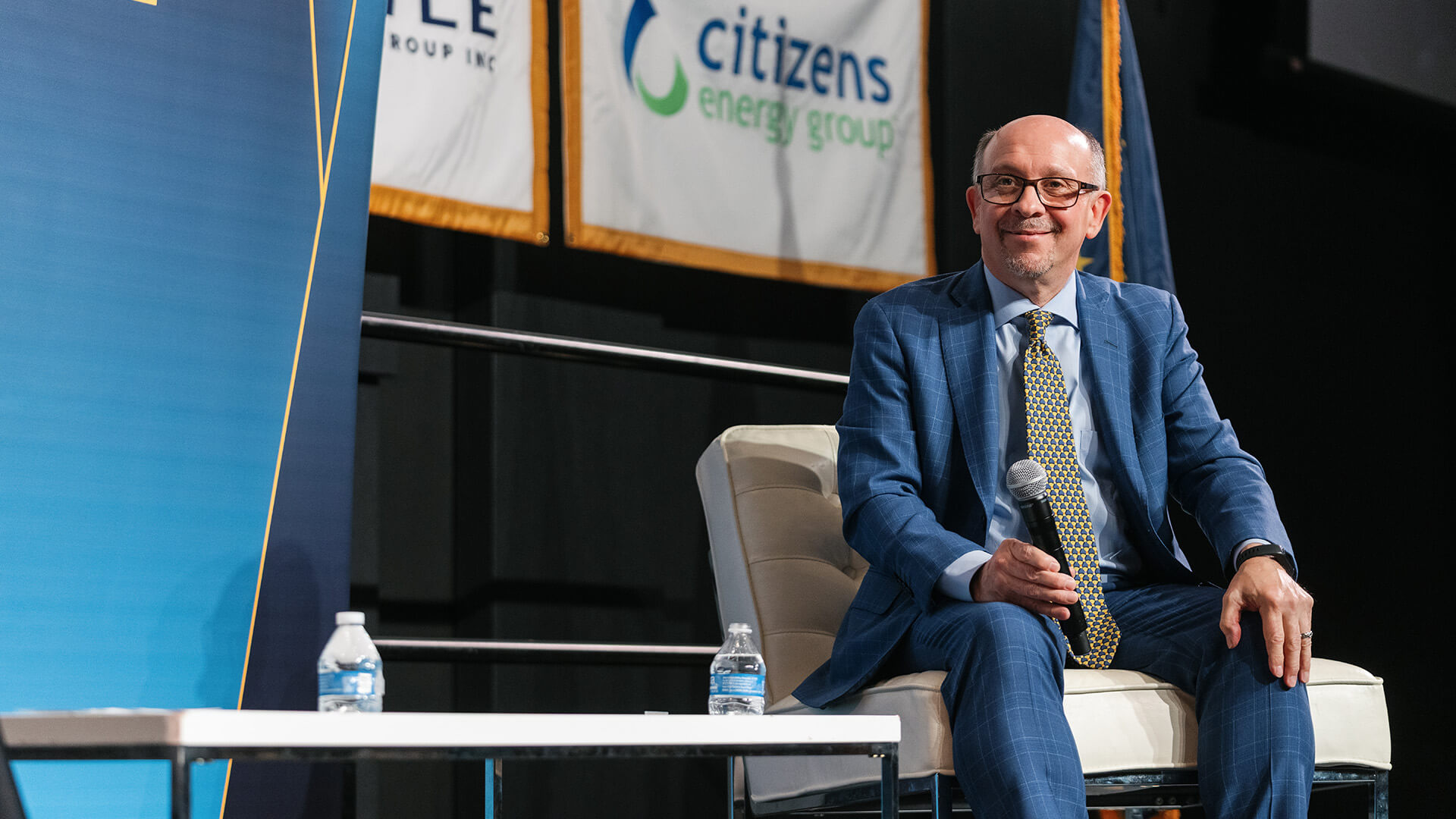
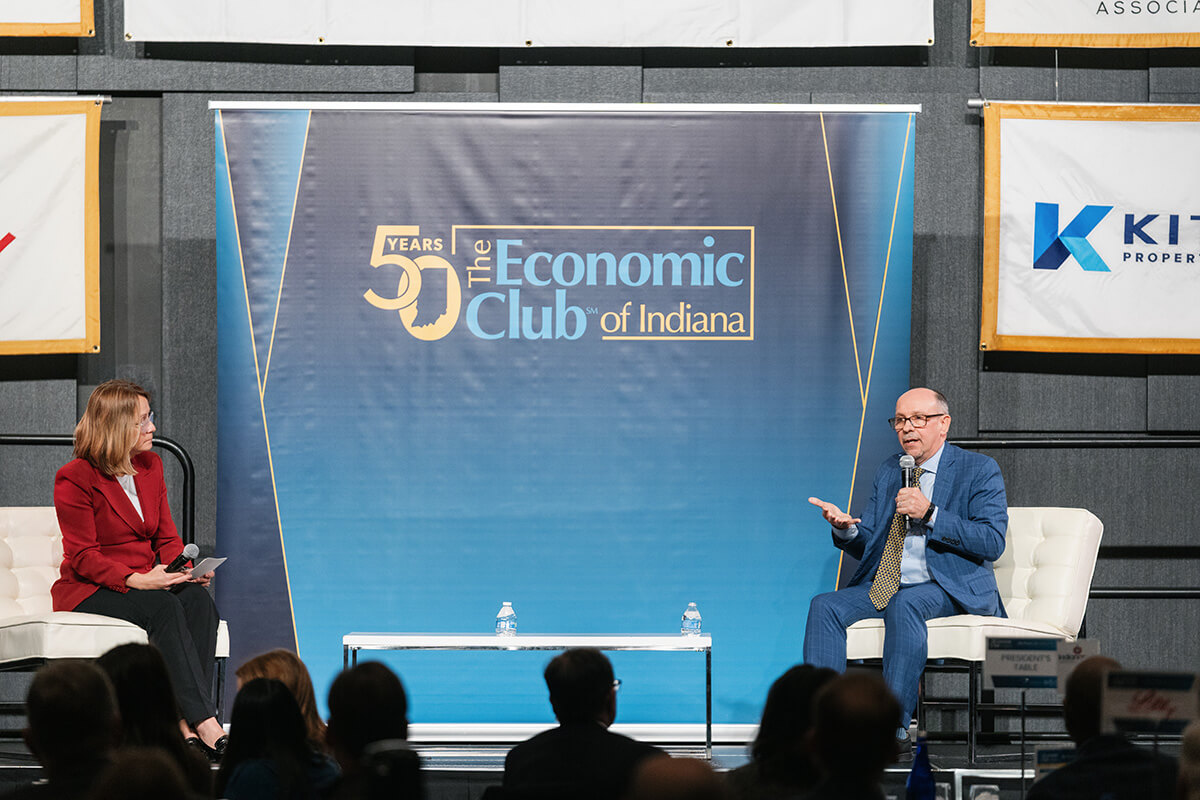
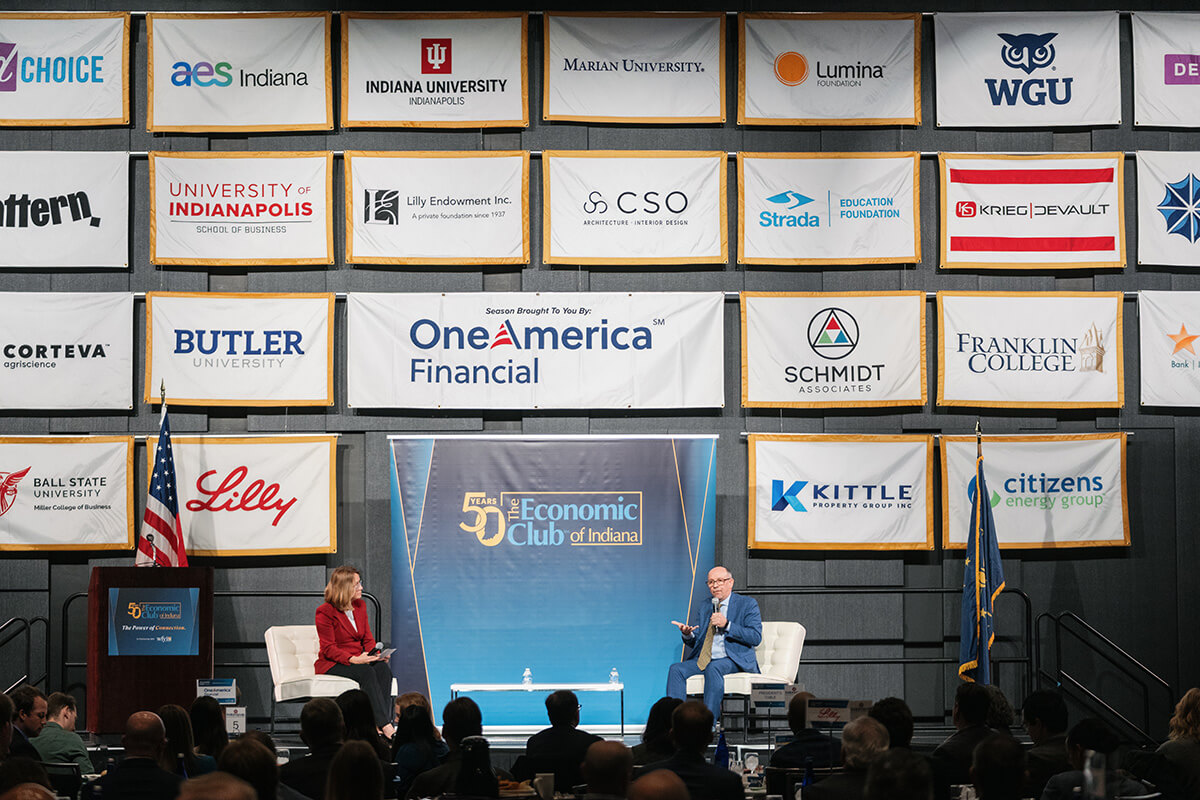
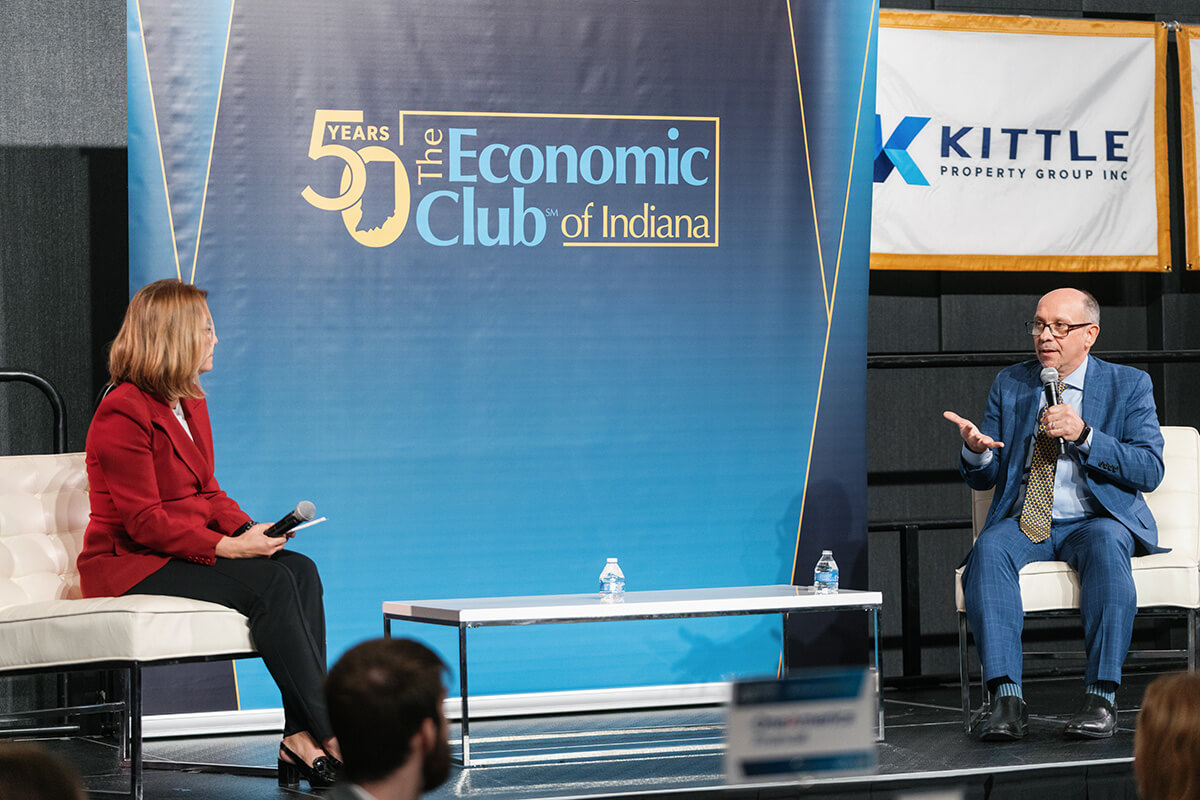
Remarks by Jamie Merisotis
President and CEO, Lumina Foundation
The Economic Club of Indiana
Thursday, February 12, 2026, 12:30 p.m. Eastern
It’s a pleasure to be back at the Economic Club of Indiana. As a former Club president and speaker, I’ve long admired the tradition this organization represents: bringing together leaders from business, government, philanthropy, and education to wrestle with big ideas and practical challenges. That tradition has never been more important than it is today.
This afternoon I want to explore a question that is on all of our minds: What does the rise of artificial intelligence mean—for jobs and our economy, for higher education, and most importantly, for the people of Indiana and this country?
As someone who has spent much of my career at the intersection of education and work—and who wrote a book on human work and AI—I’ve been thinking about this moment for some time. Five years ago, when that book was released, I wrote that work was changing in unprecedented ways as technology took over more of the tasks people once performed.
I was fortunate to have gotten a glimpse of the future as I did research for the book. But even then, I underestimated the speed of change.
When personal computers were introduced, it took 20 years for half of US households to adopt them. Mobile phones reached that mark in six years. Generative AI has done it in three. ChatGPT reached 100 million users in roughly two months.
AI is no longer emerging. It is embedded—in our workplaces, in our classrooms, in our daily lives.
Stanford research shows that nearly 80% of organizations are already using AI in some part of their operations. Job postings that mention AI skills have surged by more than 400% in the past two years.
At the same time, the story is more nuanced than the headlines suggest. Adoption varies widely by sector. An Indiana Chamber report estimated that less than 25% of work time in life sciences and just 18% in agriculture will experience significant automation in the near term. The widely reported decline in entry-level job postings since 2023 may reflect AI—but it may also reflect broader economic conditions.
Context matters. And if we step back, the debate itself sounds familiar. For all that’s changed, the debate over “the future of work” today isn’t a whole lot different than it was five years ago. On the one hand, we hear that AI is going to cause massive job losses—what I call the “robot zombie apocalypse.” On the other hand, many are convinced that technology’s impact is overstated, and that the AI bubble is going to burst any day.
History suggests a more balanced view. Technology has always reshaped work—destroying some jobs, creating others, and transforming most. The key question is not whether change is coming. It is whether we will prepare people to thrive within it.
Indiana’s own story proves that we can.
What drove our economy in the 19th century was agriculture: Indiana was a top 5 producer of both corn and hogs. In the early 20th century, Indiana was second only to Michigan in auto production. Today, we have the highest concentration of advanced manufacturing jobs in the country. Automotive is still part of the mix, but so are aerospace and orthopedics. And while Indiana is still among the leaders in producing corn—and soybeans—it’s also a leader in life sciences, transportation and logistics, and technology and data centers.
Each transformation rendered some jobs obsolete. But each time, Hoosiers adapted—through new skills, new industries, and expanded education and training. Today, more Hoosiers are working than at any point in our history.
The throughline in that story is not technology. It’s people.
Work matters deeply to us as humans. It shapes our dignity, our sense of contribution, our identity. It’s an essential part of who we are. Decades of survey research show that even the lowest-wage workers are willing to trade some money if it means that their work makes a difference.
In an uncertain world, work anchors us.
That’s why this moment calls not for fear—but for focus.
If AI can perform more and more of the routine and predictable tasks of work, then the value of distinctly human capabilities rises. For fun, and for some fascinating insight, I recently asked AI itself, in the form of ChatGPT 5.2, about its own limitations. Here’s how it responded:
“AI’s limits include lacking true human-like understanding, creativity, empathy, and common sense; struggling with novel problems, context, and bias in data; and preventing genuine intuition or wisdom beyond programmed patterns.”
AI struggles with novel problems and context. It operates within patterns; it doesn’t possess purpose. In other words, it can simulate humanity—but it does not possess it.
This is why we must focus on preparing people for human work, which is the work that only humans can do. Work rooted in compassion, ethical judgment, creativity, collaboration, trust, and the ability to navigate complexity. We’ll need to prepare for this new era of human work by developing our human capacities like problem-solving, teamwork, genuine curiosity and humility, adaptability, and interpersonal communication.
These are often somewhat dismissively labeled as “soft skills,” but they are anything but soft. I prefer to call them durable skills—because they endure across technologies, industries, and decades.
We all know that you can interact with a chatbot 24 hours a day, but when the stakes are high, you still ask for a human. Think about it in the context of health care. AI can identify anomalies in a medical scan, but only a trained clinician can guide a patient through a life-changing diagnosis with wisdom, empathy, and the trust of the patient they are treating.
So the challenge before us is clear: How do we design an education and workforce system that prepares people not just to use AI—but to lead alongside it?
Higher education is central to that answer. But we all know that in this moment, higher ed is facing a number of serious headwinds. These include: a shrinking number of Americans under the age of 18; attacks on research, curricula, and campus speech; and growing skepticism over the value of a college education. A recent Gallup survey says that over the past 12 years, the share of adults who say that a college education is “very important” dropped from 70% to 35%.
At the same time, real-world behavior paints a more nuanced picture. Enrollment in four-year colleges and universities is actually increasing, and the share of adults with bachelor’s degrees has steadily grown, suggesting that, when faced with actual decisions, most people still see degrees and other credentials as valuable. In short, Americans largely still recognize the value of higher ed for themselves and their children, and in my view, they’re correct to do so.
Census Bureau data show that households headed by a bachelor’s-degree holder earn a median income of $133,000, more than double the $58,000 for those led by someone with only a high school diploma. Over the past two decades, degree-holding households saw real incomes rise by 13%, while high school-only households saw virtually no rise. The Cleveland Fed recently estimated that the college wage premium—which is 70% today—will be 76% in 2042.
Of course, the rethinking we need to do is broader than four-year institutions. Forty percent of American undergraduates—some 8½ million students—are enrolled in community colleges. The good news is that there is also a significant, though generally lower, wage premium for people with associate degrees and quality workforce credentials like certificates and certifications. The bad news is that while enrollment is up at four-year institutions, community college enrollment remains below pre-COVID levels, primarily due to a strong labor market.
So, when it comes to the general value, of course higher ed is worth it. That’s been the case throughout our country’s history, and the evidence is overwhelming that it still is.
But the question is whether our system is evolving fast enough to meet the needs of today and tomorrow.
High costs have put too many schools out of reach for many Americans. There are also legitimate concerns about misalignment with the job market, barriers to access, and perceived politicization.
We’ve reached a point where we must rethink the fundamentals and accelerate progress toward something new and better for students and society. This will require a dramatic overhaul that recasts how we pay for and structure institutions and the systems that support them.
This overhaul is a key part of Lumina Foundation’s new national goal, which calls for 75% of adults in the U.S. labor force to have college degrees or other credentials of value leading to economic prosperity by 2040. This goal recognizes both the higher need for skilled workers and quantifies the payoff of education. And I think there will be broad agreement in this room on the kinds of things that will be needed to get there: things like offering a wide range of higher education courses that develop relevant future skills demanded by employers; and making college affordable and accessible for a diverse range of learners; and ensuring that learners become both great workers and active and engaged citizens.
At the same time, I have no illusions that this kind of transformation will be easy.
A redesigned system will have to engage today’s students. The model designed for 18-year-olds attending full-time residential colleges no longer reflects reality. One-third of today’s students are 25 or older. Half are first-generation. Eighty percent work. Forty-four percent are financially independent. Meanwhile, 50 million Americans have only a high school diploma, and more than 40 million have gone to college but never received a credential.
What’s encouraging is that many states—including Indiana—are adapting. Along with reining in prices and expanding scholarships and need-based aid, more states are encouraging schools to consider options like three-year degrees and to offer more flexible scheduling to meet the needs of today’s learners. More states are creating real financial incentives for schools to partner with businesses to ensure they’re teaching in-demand skills, and are using internships, apprenticeships, and other programs to give their students entrée into good jobs.
You’ll note that our 2040 goal speaks to the idea of credentials of value. We’re putting renewed emphasis on tying degrees and other credentials to return on investment, good jobs, more opportunities for further education, community engagement in an increasingly disconnected world, and other measures of value.
This means focusing not only on college degrees, but on high-quality workforce credential programs that are aimed at getting more people onto the ladder of opportunity to earn family-sustaining wages and build a more durable career path.
Many states, including several that we work with at Lumina, are developing ways to make short-term workforce credential options easier to navigate, assess, and pay for, and are boosting investments in these programs.
So reaching that 2040 goal will require affordability, flexibility, and stronger alignment with workforce needs. It will require short-term credentials that truly deliver value. It will require transparency so learners can see which programs lead to good jobs. And it will require collaboration between higher education and business at a scale we have not yet achieved.
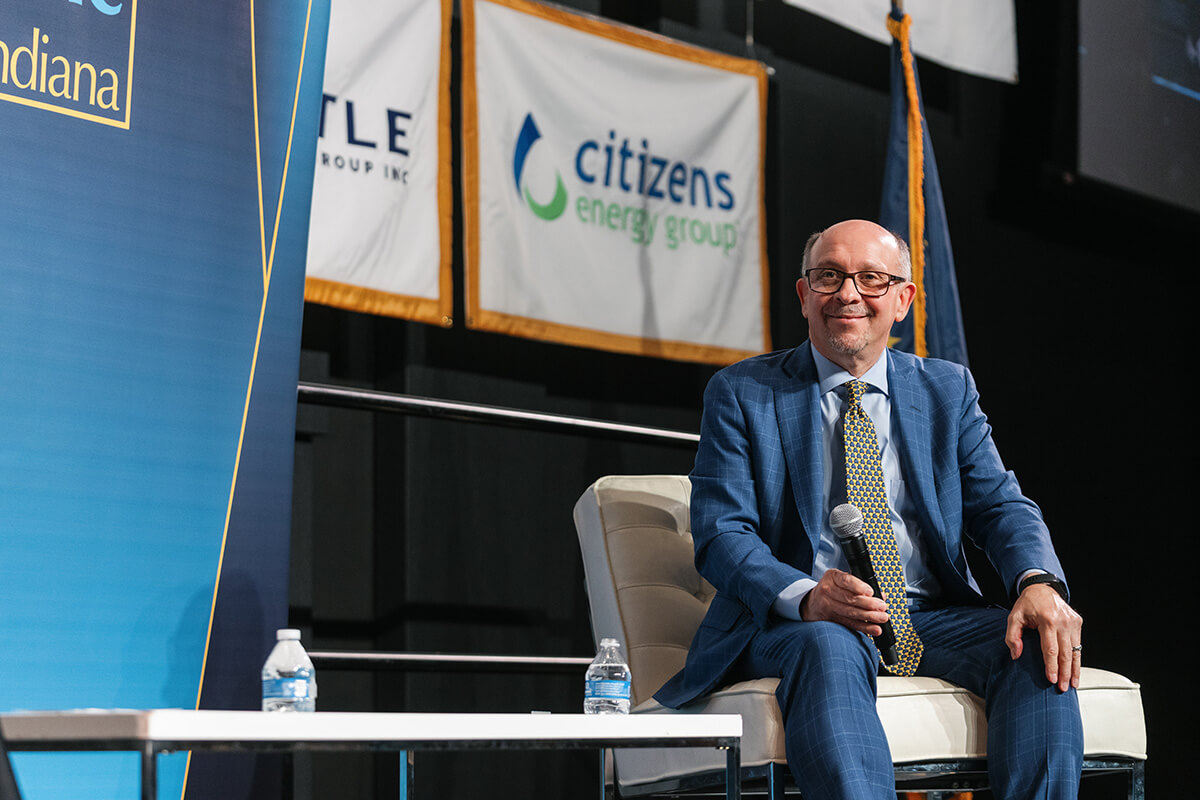
Which brings me to employers.
For years now, we’ve heard about the skills gap—a misalignment of skills employers say they need with what colleges are providing students. Colleges are told they’re not producing the right talent. Employers are told they’re not clearly signaling their needs. The truth is: Both sides must do more.
Employers need to do a better job of signaling exactly what skills they’re looking for. Employers can also collaborate more closely with local institutions on aligning curricula with workforce needs through internships, specialized training, and research. A key focus of the Central Indiana Corporate Partnership, for example, is connecting universities like Purdue, IU, Indiana State, Ivy Tech, and our many private, nonprofit colleges with major employers to develop talent pipelines.
TechPoint reports that employers increasingly expect candidates to arrive with applied experience—like internships, apprenticeships, or real-world projects—but there simply aren’t enough opportunities. In 2023, more than 8 million U.S. students wanted to do an internship but fewer than half were able to.
Unlike the rest of the industrialized world, the U.S. has never had a substantial apprenticeship model. This is in part due to the size and scale of our economy. But it’s also true that, while there’s a nascent movement around what’s called degree apprenticeships, the fact is, they are hard to create and sustain. The work of the Indiana Career Apprenticeship Pathway initiative seems like a promising way to get these ideas more into the DNA of both consumers and employers.
As we head into a world where humans are increasingly working alongside technology, employers need to create more work-based learning opportunities. As AI capabilities improve, we’ll need workers with good judgment on how AI is deployed and whether its outputs are reliable and valuable. And that kind of knowledge is something people learn best from experience in the workplace.
At the same time, with Boomers and Gen Xers retiring and a smaller cohort of young people coming behind, businesses are going to have to upskill the workers they have.
A human resources manager I was talking with recently put the challenge we face in simple yet stark terms: “The workforce of the future is in the workforce right now.”
For all that business is already investing in training, it needs to invest even more in building both the technical skills and the human capabilities of incumbent workers.
About half of businesses offer tuition assistance, but fewer than 5% of employees take advantage of it. Employers need to provide both tuition support and the time for their employees to do the learning. And employers need to work with their employees not only to address short-term skill needs, but also to support a long-term learning plan for employees’ ongoing education. These plans include the specific skills that an employee needs to learn for the increasingly human tasks and human/AI collaboration that will be required of them, while also providing tuition assistance, child care and transportation, and other supports associated with effective learning.
The fact is, these investments in employee education and training aren’t just good for workers, they’re also good for the bottom line. Last year, Harvard Business School reported that companies see a 17% increase in productivity and a 21% boost in profitability when employees receive targeted training. That’s because training not only sharpens employee skills and helps them achieve key goals but also boosts engagement and retention.
Earlier, I mentioned the economic transformations Indiana experienced through the centuries. Through all those shifts, one thing was constant: an iron-clad commitment to higher education.
Indiana’s 1816 constitution pledged that the state would create, “as soon as circumstances permit, a general system of education.” In 1820—just four years later—the state saw the founding of the state university, which, of course, today is more familiar as home to the national college football champions. The 20 years between 1827 and 1847 also saw the founding of Hanover, Wabash, what is now DePauw, Franklin, Earlham, and Notre Dame.
Higher education has been great for Indiana. Equally important, it’s been a foundational building block of American greatness.
Beginning with the GI Bill after World War II—and continuing into the 1960s and ’70s with the National Defense Education Act, the Civil Rights Act, the Higher Education Act, and the creation of Pell Grants—the nation provided college opportunities for more Americans. Leaders of the post-war era believed that expanding college access would ensure that women, students from low-income households, students of color, first-generation students, and others would have the opportunity to succeed. We not only invested in the education of more Americans, we also ensured that our nation’s colleges and universities were the global leaders in innovation and quality learning that met the needs of an ambitious nation and its equally ambitious people.
In short, this country built the world’s largest economy and strongest military, and achieved global leadership in an array of scientific, technological, and cultural fields. Americans walked on the moon, added a decade to average lifespans, created today’s knowledge economy, and saw rising standards of living for most of our citizens. And all of that was facilitated by higher education and its capacity to develop new knowledge, and to transmit knowledge that serves both individuals and society.
Now we stand at another inflection point.
AI will transform how we work. It will change tasks, industries, and expectations. But it will not change a fundamental truth: Our prosperity depends on developing human potential.
The question is not whether AI will shape the future. It will.
The question is whether we will shape AI’s impact through smart investments in people.
If we focus on human work—on durable skills, on accessible and affordable education, on stronger partnerships between business and higher education—then this technological shift can expand opportunity rather than narrow it.
Indiana has reinvented itself before. We have moved from farms to factories to advanced manufacturing and life sciences. Each time, we succeeded because we believed in education, in work, and in the capacity of our people.
That belief must guide us again.
If we commit to preparing more Hoosiers—and more Americans—for meaningful human work, then AI will not diminish us. It will amplify us.
And that is a future worth building.