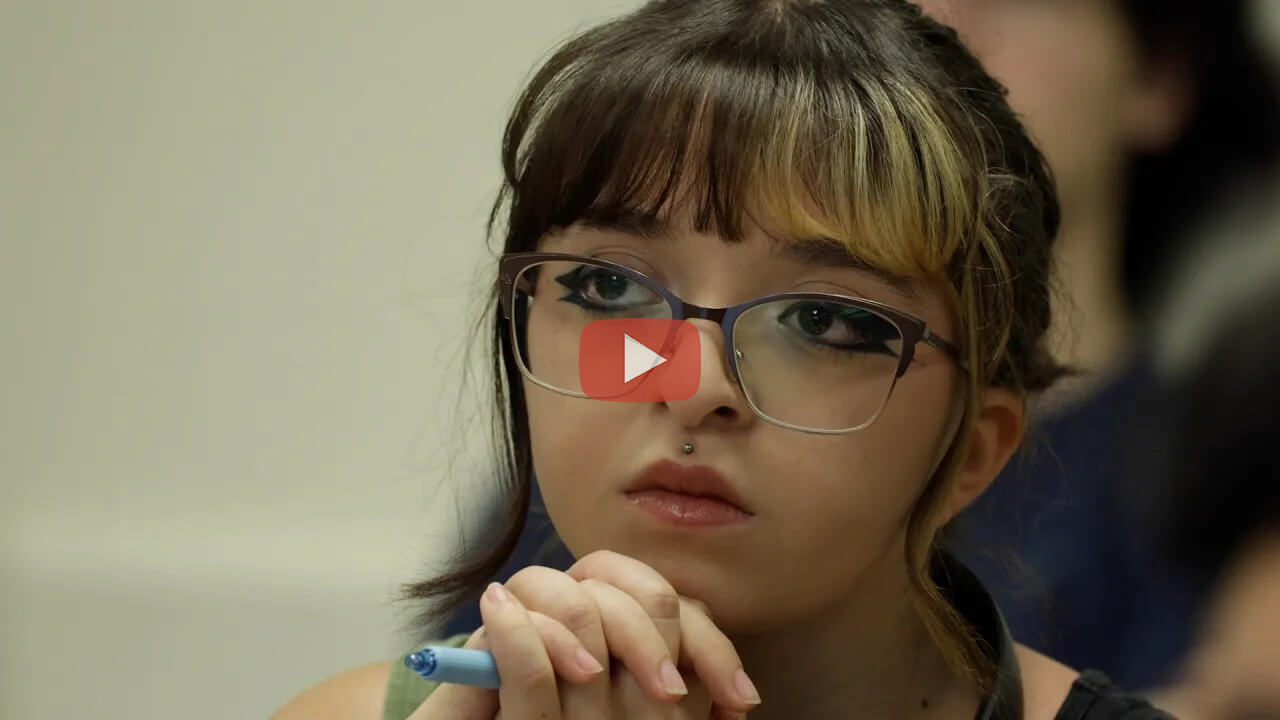
SAN BERNARDINO, Calif.—Milana Waggoner was already questioning whether she wanted to attend college when educators at Corona High School instructed her and her classmates to apply through a pilot program that gives them a guaranteed spot at most California State University campuses.
“A lot of people are really focused on studies, and
I applaud them,” Waggoner said. “I don’t think I’ve ever studied a day in my life. I collect information a little quicker. I don’t get perfect grades, but I don’t get bad grades.
“I don’t know,” she continued. “It’s like you have to be a specific way to love college.”
Despite being on the fence about whether she needed to attend college during her senior year in high school, Waggoner had no choice but to apply. Even if the students weren’t necessarily planning to go to college, she said, the counselors told them, “Apply somewhere.”
Now, Waggoner is one of the 12,000 Riverside County students to receive direct admission through the 2024 pilot.
For Waggoner, applying to college as part of a group made the process “a lot easier.” It ultimately led her to Cal State University-San Bernardino. The campus serves about 16,000 undergraduate students in the Inland Empire, a valley region.
It wasn’t her first choice.
“I just thought I wouldn’t thrive here,” Waggoner said, speaking in a skybox that overlooks the student union at the college. But ultimately, she made friends, settled into a routine, and even found an on-campus place to nap between classes, her various jobs, and playing in a local mariachi band.
Officials and educators in California see direct admission—the path Waggoner took to college—as an important tool. The pilot program is expanding statewide this year in the hope of attracting more of the state’s dwindling number of high schoolers to college. Officials also say direct admission can help sway students who, like Waggoner, are unsure about pursuing education beyond high school.
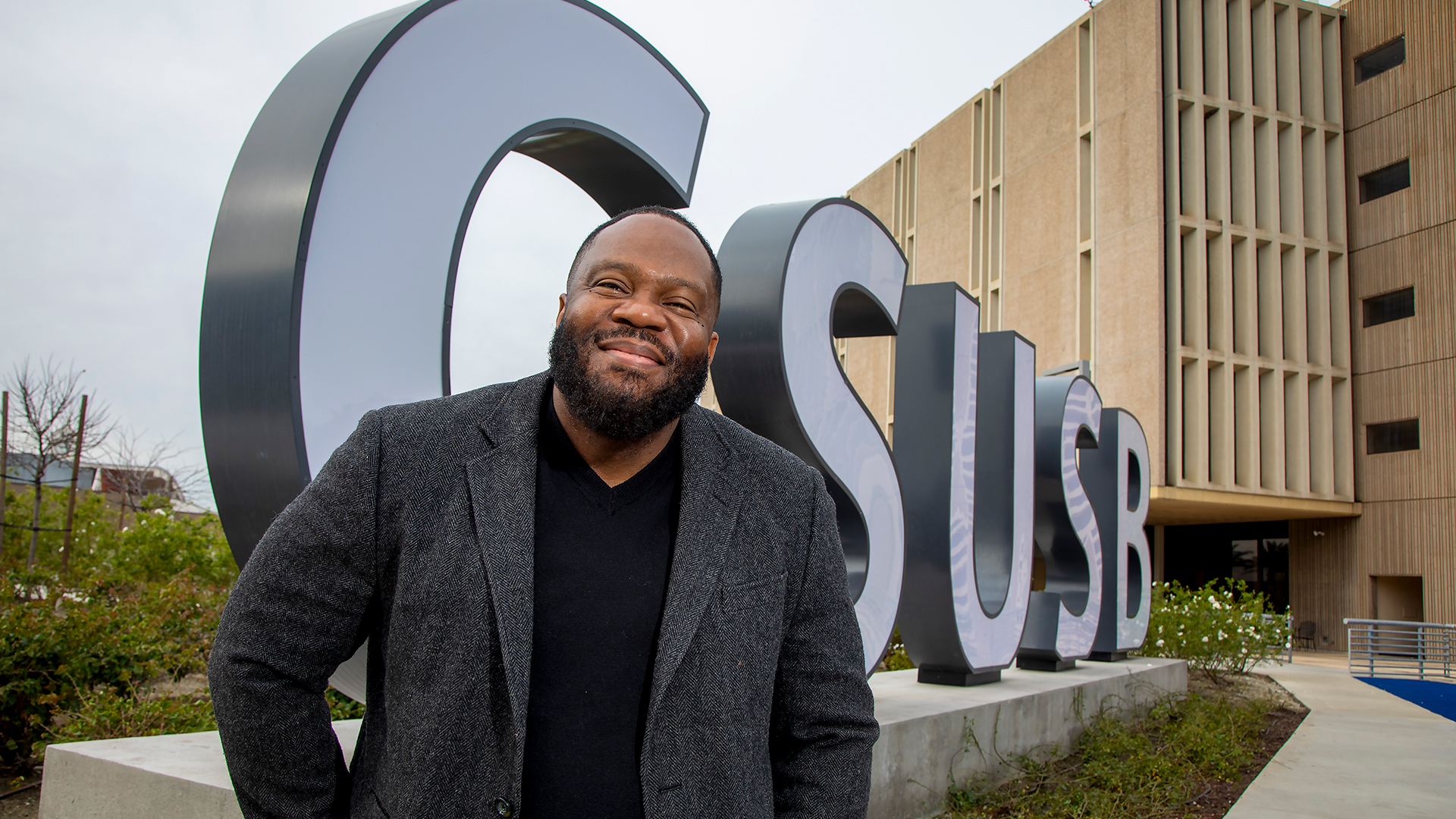

“We are meeting students where they are,” said Mark Rogers, an outreach counselor and recruiter at Cal State-San Bernardino and one of direct admission’s staunchest advocates. “We’re able to ensure these students’ space at the university.”
Asked to rank direct admission in terms of importance as a recruiting tool, Rogers replied: “High. I can’t put a number on it, but it’s very high.” He estimates that he spends half of his office time evangelizing the gospel of direct admission at Inland Empire high schools.
The way direct admission works—here and elsewhere—students still must apply to a college even after they’ve been admitted.
Cause for celebration
Cal State-San Bernardino takes an active role in encouraging students to take the next steps in the application process and to apply for state and federal financial aid. Rogers said the university does this by inviting students on campus and “celebrating” their admission to college by virtue of earning at least a 2.5 GPA and meeting the state’s course requirements in various subjects, including history, English, math, science, foreign language, and the arts.

Direct-admission students receive “Coyote passes,” which are basically cards featuring the university’s mascot and a message.
“It tells them that, you know, you’re in the pack now,” Rogers said.
José Muñoz, interim chair of the Department of Geography and Environmental Studies at San Bernardino, says direct admission allows universities to recruit more students than they otherwise would from a shrinking pool of students in California because of lower birth rates and out-migration.
“I think certain campuses are in a situation where some sort of barnstorming effect is needed because the pie of students is much smaller now,” Muñoz said.
Citing statistics that show more than 70 percent of Cal State-San Bernardino students are first-generation, nearly 60 percent are Pell-eligible, and about 60 percent are Latino, Muñoz said direct admission removes barriers and boosts college attendance in a region that needs it.
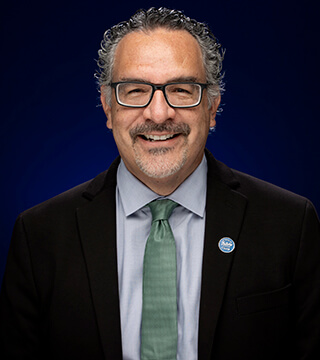
“We are in an area that doesn’t have that many BAs,” Muñoz pointed out. In Riverside County, just 26.2 percent of residents 25 and older have at least a bachelor’s degree. That’s more than 10 percentage points below the national rate (36.8 percent). “So, making the campus as open as possible seems like a good thing,”he said.
Students say they appreciate how direct admission simplifies a process that can leave many feeling lost.
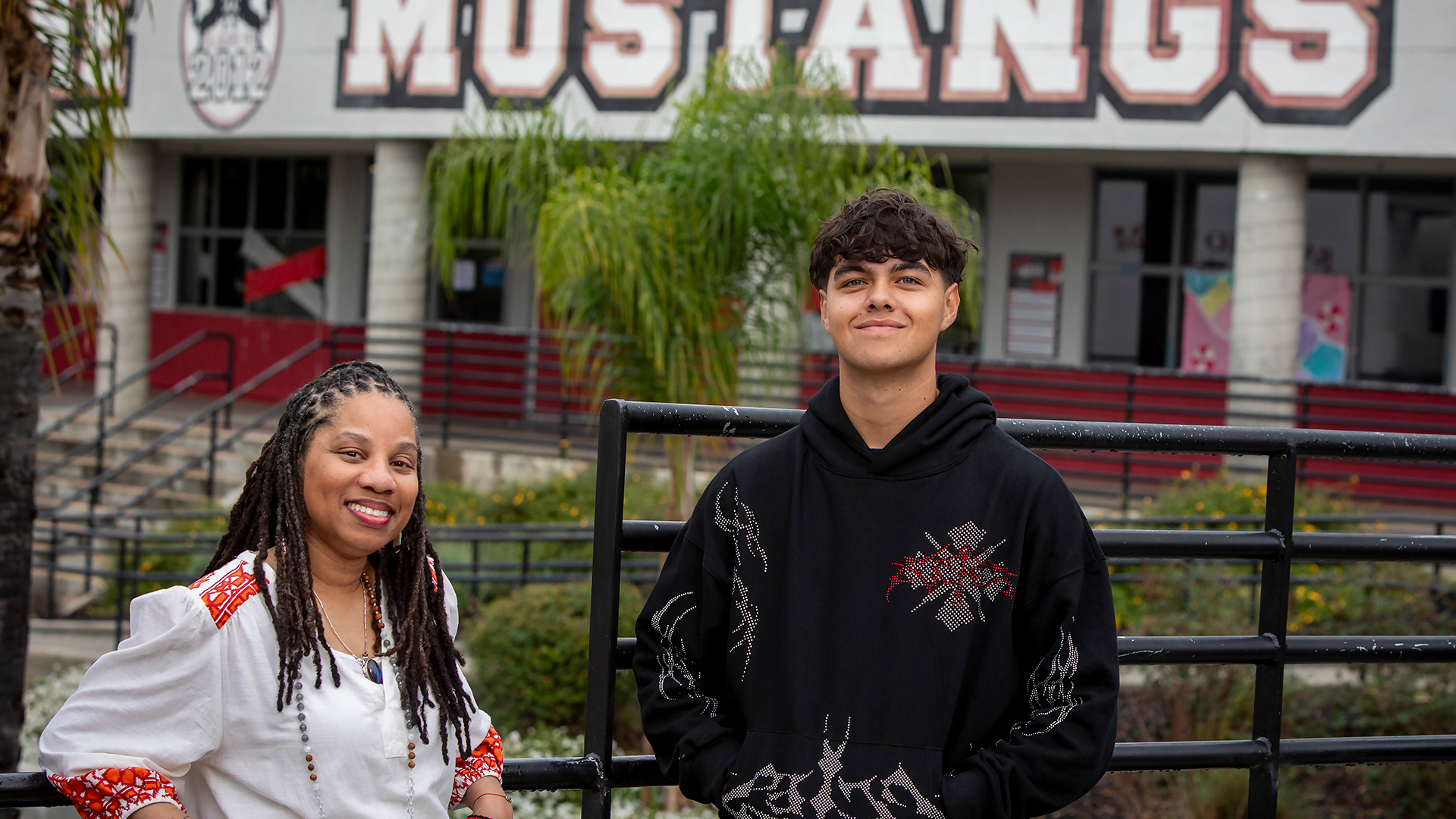
“I had no idea what to do,” conceded Gabriel Flores, recalling his view of the college application process before a counselor at Rancho Verde High School told him about direct admission.
Flores, a senior and a pitcher who sports a No. 99 jersey for the varsity baseball team at the Moreno Valley school, said he wasn’t planning to go to college until a history teacher got him interested in history and inspired him to become a history teacher as well.
He said he appreciated the application fee waivers available to students as part of the direct admission process.
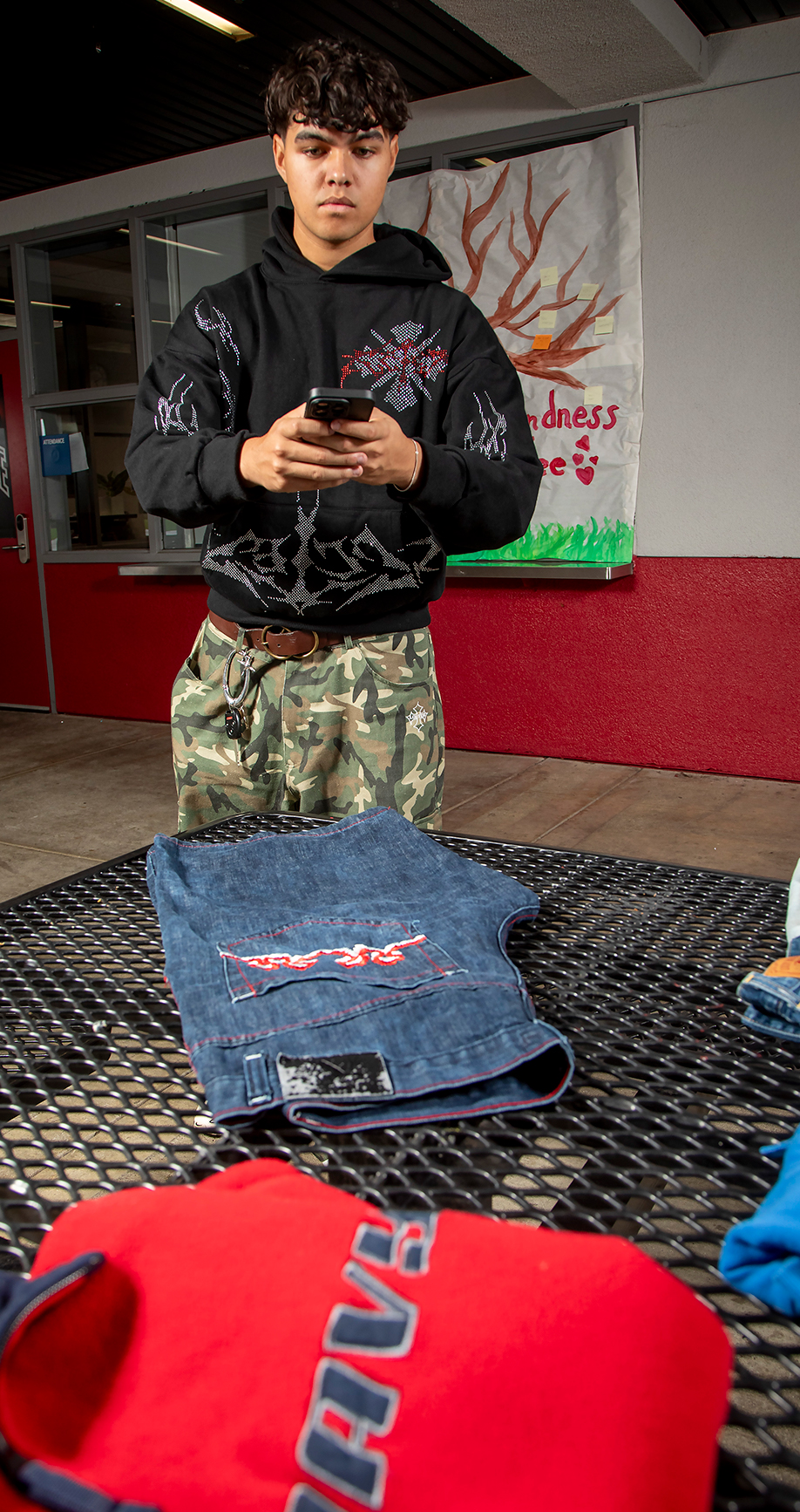
“The fee waiver really helped me because, with the cost of everything, each application to each school is at least 80 bucks,” he said. It’s no surprise Flores knows a bargain when he sees one. A young entrepreneur, he runs Fivedeepvtg, an online clothing business specializing in vintage clothing and streetwear.
Through direct admission, Flores has applied to several California State campuses, including San Bernardino. Despite the ease of the process, Flores said applying to college makes little sense if a student hasn’t specified a reason to attend.
“There has to be a reason,” Flores said. “If there’s no reason, then what’s the point?”
Waggoner expressed similar thoughts.
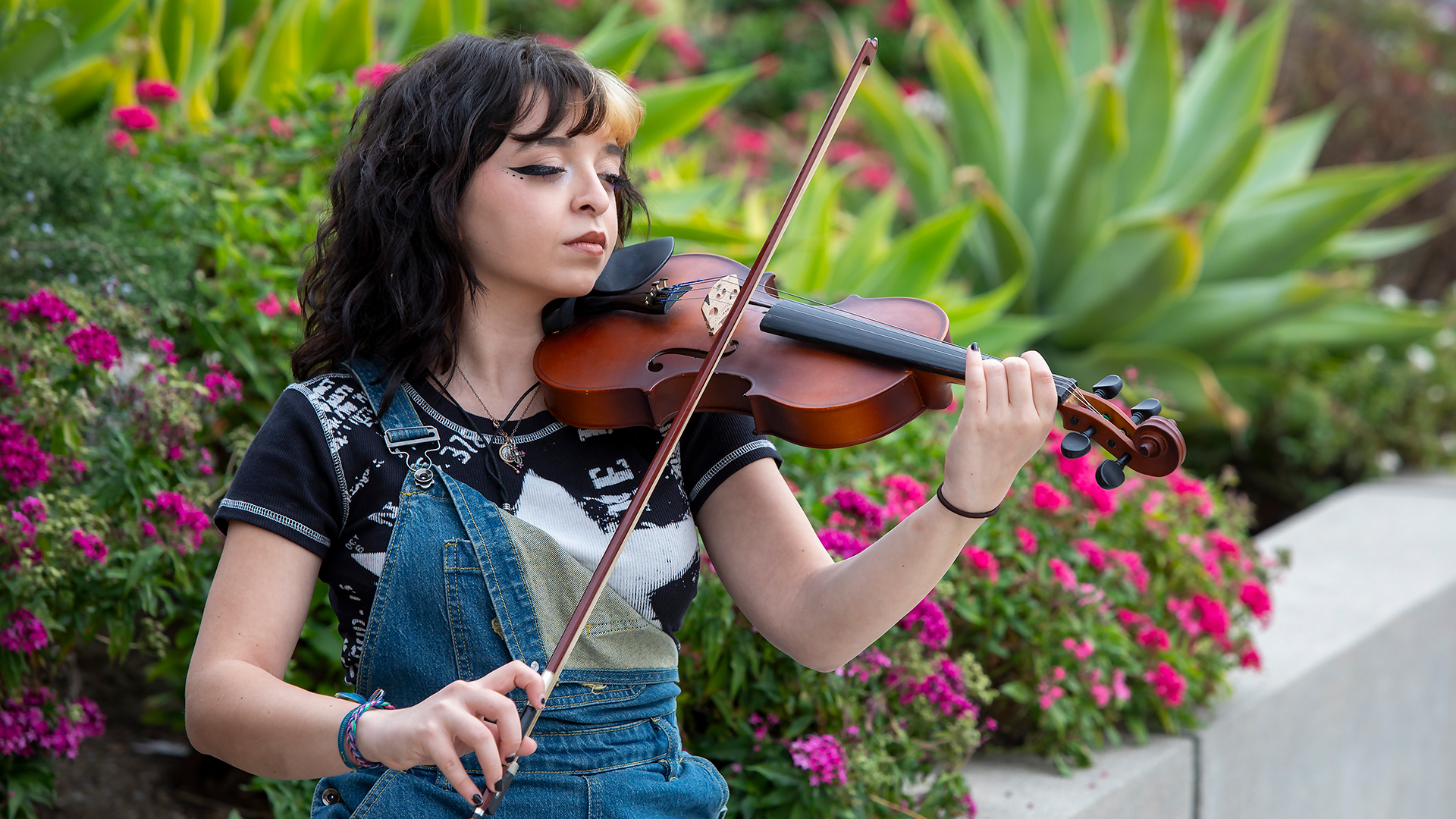
When she got her acceptance letter from San Bernardino, it came on the same day as another acceptance from her top choice, San Jose State University. She had visited the San Jose campus, met a couple of professors there through her high school chemistry teacher, and liked the university’s programs, including its forensic science program.
“I was really excited to get accepted to San Jose,” Waggoner said. “I like the city.”
In the end, she decided she wanted to stay closer to family.
“I just didn’t want to leave home,” Waggoner said. “I’m the oldest child, so I have a lot of commitments out here. I’m in a mariachi band. I have two jobs out here and a lot of people that I just didn’t want to leave.”
Those people include her 17-year-old brother. “We’re very close,” Waggoner said. “He’s one of my best friends.”
So, she consulted with her high school counselor.
“We looked at everything that the school offered,” Waggoner said. “We looked at what my four-year plan could look like here. And I decided maybe this would be a better fit, so I decided to stay here.”
Plus, San Bernardino has a program in forensic science, the field in which she hopes to have a career one day.
“Ultimately, it came down to what I wanted to pursue,” Waggoner said.
Now, she commutes to school from her home in Corona, driving a 2019 Ford Fusion that she got from her mom.
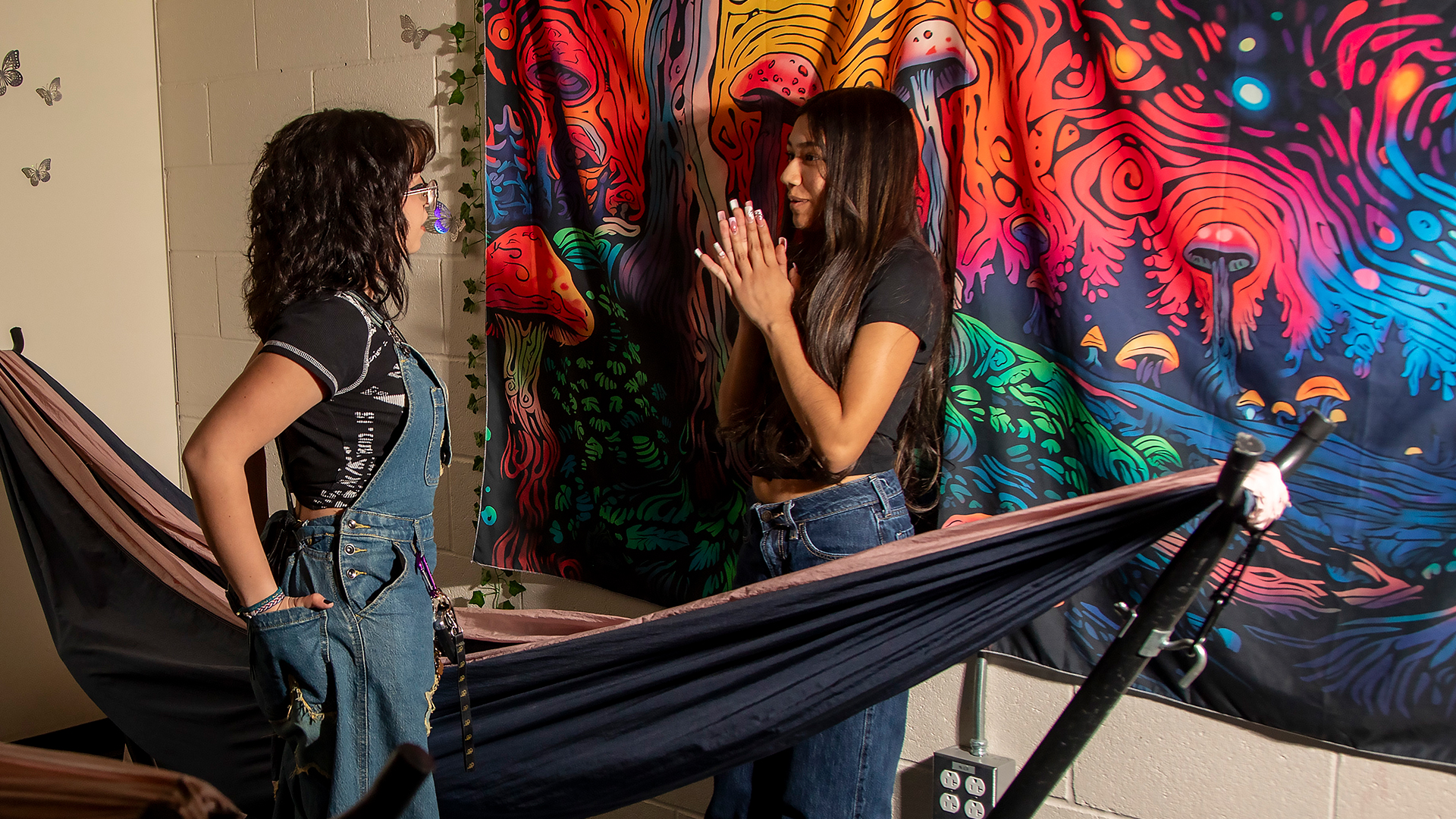
When her classes end, and she has time before one of her part-time or seasonal jobs, Waggoner likes to climb into one of the hammocks in a quiet room in the student union known as “The Retreat,” which she learned about from a friend.
“I came here, and I took a nap. I was like, ‘Oh my gosh, I love it,’” she said. “I take a lot of naps here.”
Waggoner’s take on college life is paradoxical.
On the one hand, she views college as “just a thing I do.”
“I don’t care as much if that makes sense,” she said. “It sounds kind of cocky and arrogant.”
On the other hand, she said, she’s “always been career-driven, very serious about education and where I want to take myself in life.”
For Waggoner, there’s one downside to getting into San Bernardino through direct admission. “I just kinda feel like I’m not good enough because I didn’t have to fight for my place here,” she said. “I didn’t have to prove myself.”
Waggoner is not the first in her family to attend college, but she is the first to attend a university. “Everyone else went to community college,” she said. Her mother is a longtime insurance agent. Her father is an electrical engineer at a Tesla warehouse. Despite coming from a two-income family, Waggoner said the fee waiver or “coupon” she got to apply to at least one Cal State University campus came in handy.
Initially, Waggoner admitted, she felt a bit cheated when she chose to attend Cal State-San Bernardino instead of her top college choice.
“It was kind of sad, honestly, because I feel like all my life, I’ve sacrificed my own happiness to be here for my family or just for other people’s benefit,” she said.
But her ambivalence lessened after she attended orientation and got acclimated to campus. “It definitely made me feel a lot better,” she said. “I met a lot of nice people. I talked to a couple of advisors and my counselor, and they said it’s almost the same here (as at San Jose State).
“It’s gonna be OK.”