HONOLULU—When students at Farrington High School attend the annual kuleana fair, an event whose name is the Hawaiian word for “responsibility,” they play a game that simulates the financial challenges they’re bound to face in life.
They draw cards that may give them a child, a car loan, or student debt.
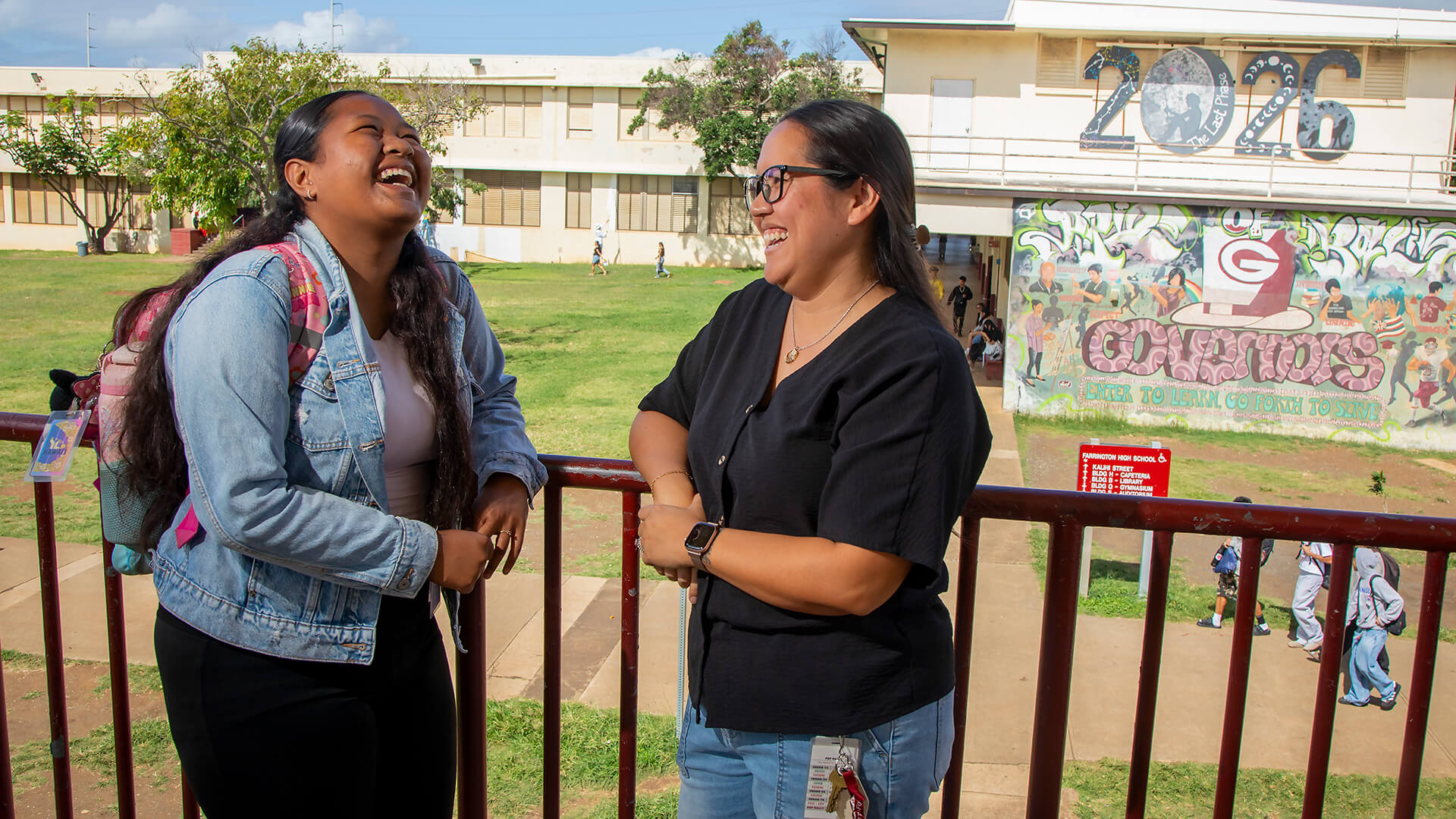
For Rianna Milne, a senior at Farrington who helped organize the school’s kuleana fair in spring 2026, it’s the last of those three that she’s trying to avoid.
“I want to go to community college first and get my associate degree before going to a university,” Milne said, calling that route “way cheaper than going straight to university.” Though she plans to attend a four-year university, Milne will begin her college career this fall at Kapiolani Community College, studying business administration.
Milne’s practical approach to college is informed by her family’s finances and the experience of two older sisters. Both accumulated student debt, she said, and one is working at the airport—handling baggage and transporting wheelchair-bound travelers—despite completing a program in dental hygienics.
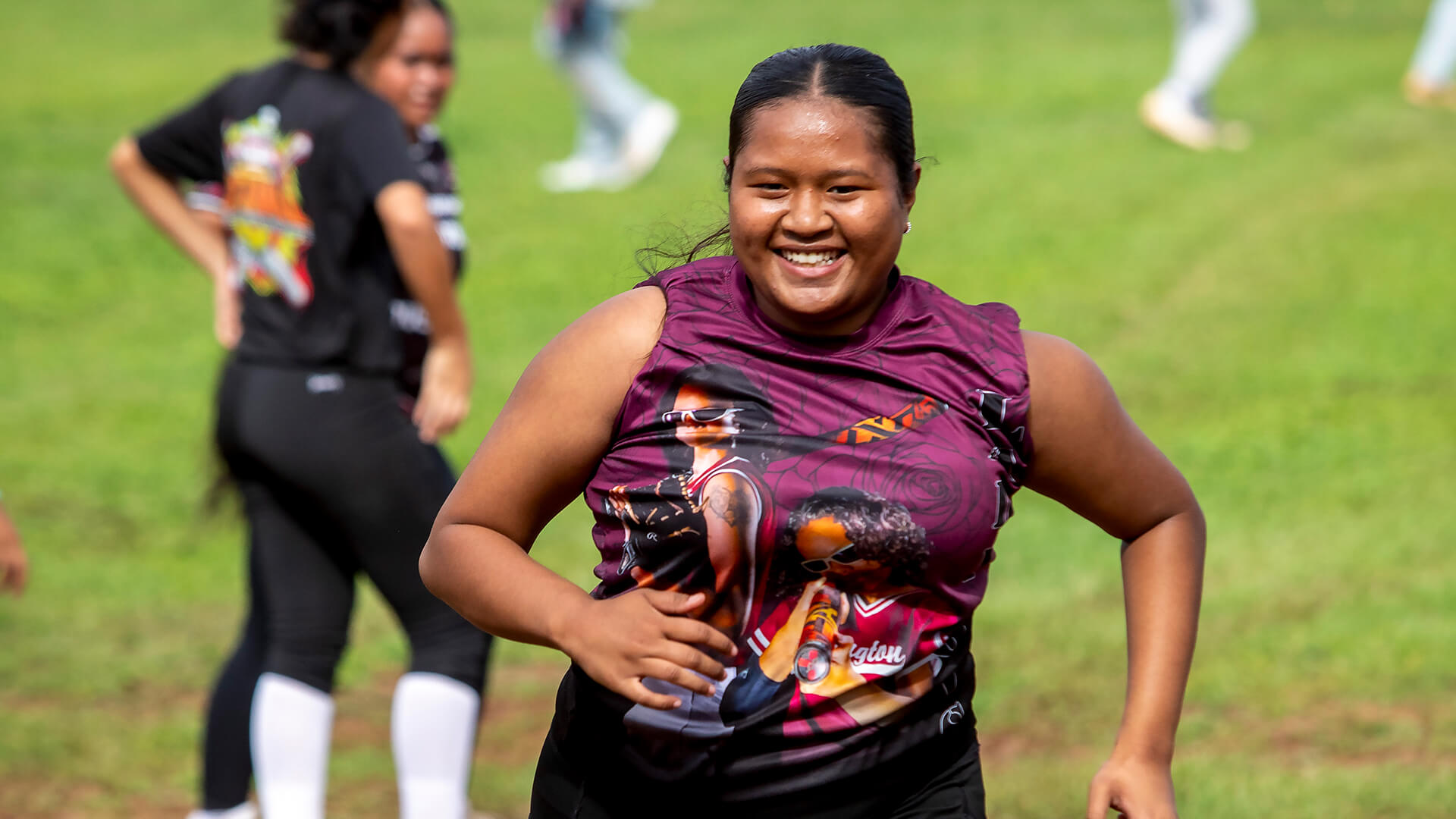
Milne offered to work to supplement her family’s income after their emergency SNAP (Supplemental Nutrition Assistance Program) low-income food and nutrition benefits expired at the end of 2025, but her mother told her not to. She wanted her daughter to enjoy her final season as an outfielder for the school’s varsity softball team. It was February, and the season was about to begin.
“It’s very hard for us because we don’t have that much money,” Milne said, sporting a black hoodie with a red, football-shaped “G” for “Governors,” Farrington’s mascot. “And I really don’t want to be in debt in college.”
One thing that has made life a little easier for Milne and for other Hawaii high school seniors facing decisions about college is Direct2UH.
Launched in fall of 2025, Direct2UH is the state’s version of direct admission, which seeks to simplify the college application process by giving high school seniors a guaranteed spot on a state-run campus. In Hawaii, those campuses include two of the state’s three universities and seven community colleges, all part of the University of Hawaii System. The state’s flagship university at Mānoa is set to join Direct2UH next year, for 2027 high school graduates. Students with a GPA under 2.7 can only be admitted to the community colleges.
Direct2UH doesn’t offer financial aid; there’s a scholarship program called Hawaii Promise that makes funds available to any state resident to attend community college. Still, the direct admission program saves students, families, and counselors a lot of time and trouble during college application season.
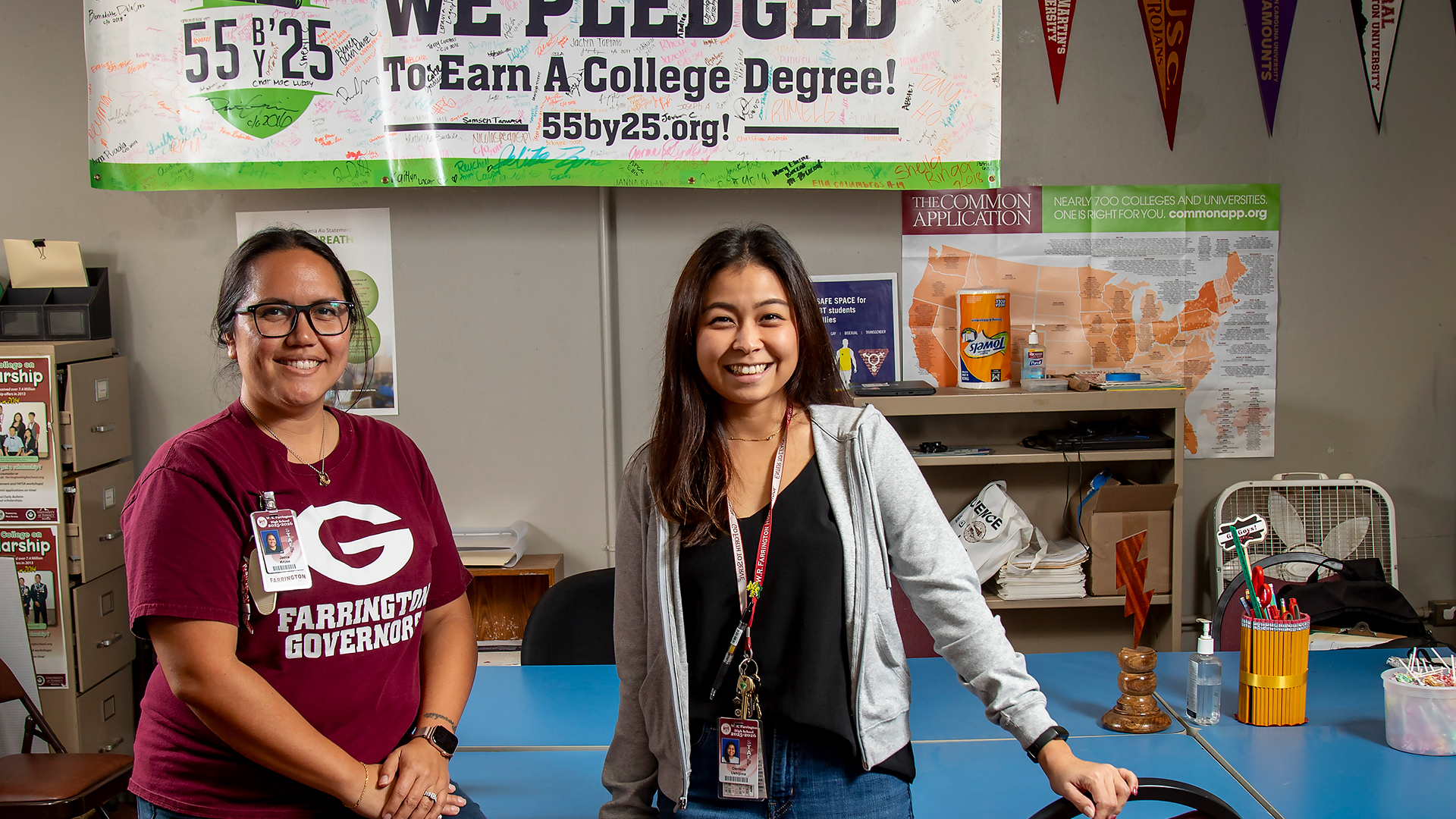
For counselors such as Danielle Ushijima, who serves about half of the approximately 500 seniors at Farrington High School, saving time on college applications means there’s more time to help students with other pressing issues related to their senior year and beyond.
‘A lot easier to navigate’
“We’re usually the ones who are walking the students through the application process,” Ushijima said. “So, when we have a shorter application, that is a lot easier to navigate. It minimizes the amount of time that we have to sit, going step by step with the student. And often that’s what this job requires—sitting with them, walking through every step.
“So, this is expedited tremendously.”
Farrington High School has long been on the front lines of Hawaii’s quest to improve college enrollment and attainment.
A banner proclaiming “55 by 25” still hangs in the school’s college and career center—a prominent reference to a statewide effort that sought to boost higher education attainment in Hawaii. The campaign began in 2008 with an ambitious goal: By 2025, 55 percent of the state’s adults would hold a college degree or certificate.
Just outside the center, fading, yellow sandal prints line the outdoor walkways. The footprints aren’t just art. They served as six-foot markers during the COVID-19 pandemic, which not only hindered Hawaii’s “55 by 25” goal but also reduced college enrollment throughout the nation.
Hawaii appears to have fallen short of its 55 percent attainment goal. The most recent Census data, from 2024, show that less than 53 percent of residents in the state’s labor force have any post-high school credential, and just 26 percent have a bachelor’s degree. Nonetheless, enrollment in the UH System has increased each of the last three years. For the fall of 2025, enrollment stood at 51,411, up 2 percent over 2024’s total.
State higher education leaders hope that Direct2UH will build on that momentum.
“We can’t answer the question about who will enroll just yet,” said Debora Halbert, vice president for academic strategy at the University of Hawaii System. “We’ll have to wait until we see who comes in the fall of ’26. But the idea was to make the process easier and give us a little more lead time in which we could reach out to students who have lots of options for where they may want to go to school—to build those relationships a little earlier through a direct admit program.”
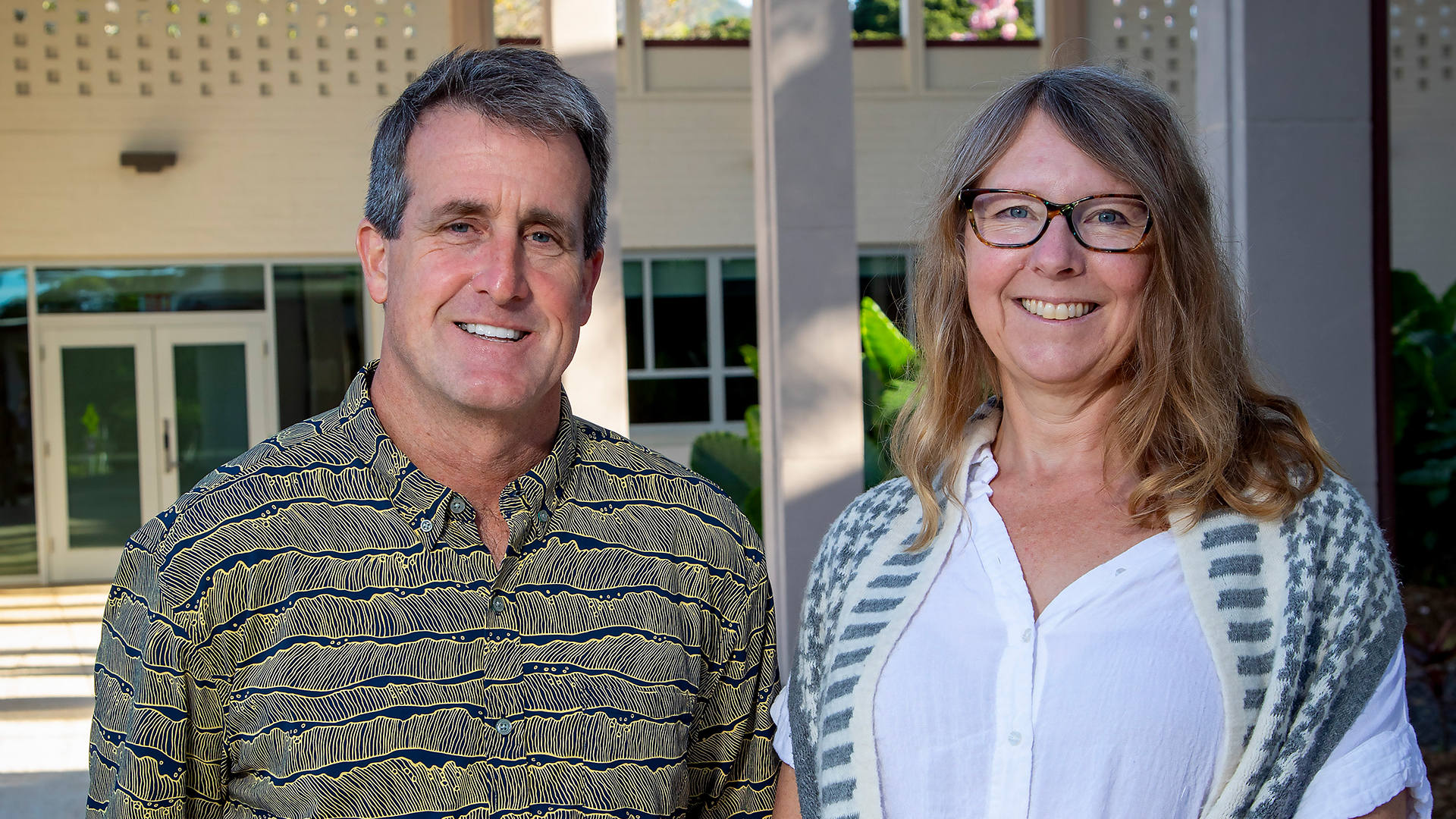
System officials say their goal with Direct2UH isn’t to hit a specific enrollment target.
“We’re not trying to put a number on this,” UH System spokesman Dan Meisenzahl said. “We’re trying to just increase our enrollment. Any increase is going to be good.”
In fact, the goals of Direct2UH go beyond increasing enrollment.
“For us, it’s about having an educated workforce for our state, which is also better for the people who get an education—and 50 percent of the public-school seniors don’t go on to college,” Meisenzahl said. “So, I think Direct2UH, in a lot of ways, is trying to reach maybe 10, 15, 20 percent of those kids who don’t even see themselves as college-worthy. It says: ‘No, you are. You deserve to be in college. You’ve earned this.’”
The system sends out postcards and literature telling them, “There’s a place for you.”
“Congratulations,” one letter reads. “Your hard work has paid off.” It then encourages students to take the next few steps, including choosing the university or community college they’d like to attend.
Proponents of Direct2UH praise it as a better-targeted version of its predecessor in Hawaii, the “Fast Pass” program.
That program, launched in 2022, also sought to streamline the college application process but did not include the system’s community colleges. Also, it was available only to “academically prepared” students with relatively high GPAs, those who were likely headed to college anyway.
‘It’s a great tool’
This time around, Hawaii’s direct admission program is casting a wider net and, according to state higher education leaders and high school counselors, Direct2UH is already yielding promising enrollment results.
Some of those results can be seen at Farrington.
“It’s a great tool,” said Jaena Kruse, another counselor who works with Farrington’s seniors. To use the system, students log in at the Direct2UH website.
“Our application rate is really high,” Kruse said. “As soon as the Direct2UH application opened, we were probably the highest number with 263 applicants,” more than half of the senior class.
“In terms of enrollment, that’s what we’re working toward,” Kruse said. “But it has made enrollment that much easier for us.”
Among Farrington students, much of the enrollment occurs at two community colleges: Honolulu Community College and Kapiolani Community College.
“We work with them to set up workshops for our students to complete the enrollment steps in order to register for classes before they go to summer,” Kruse explained.
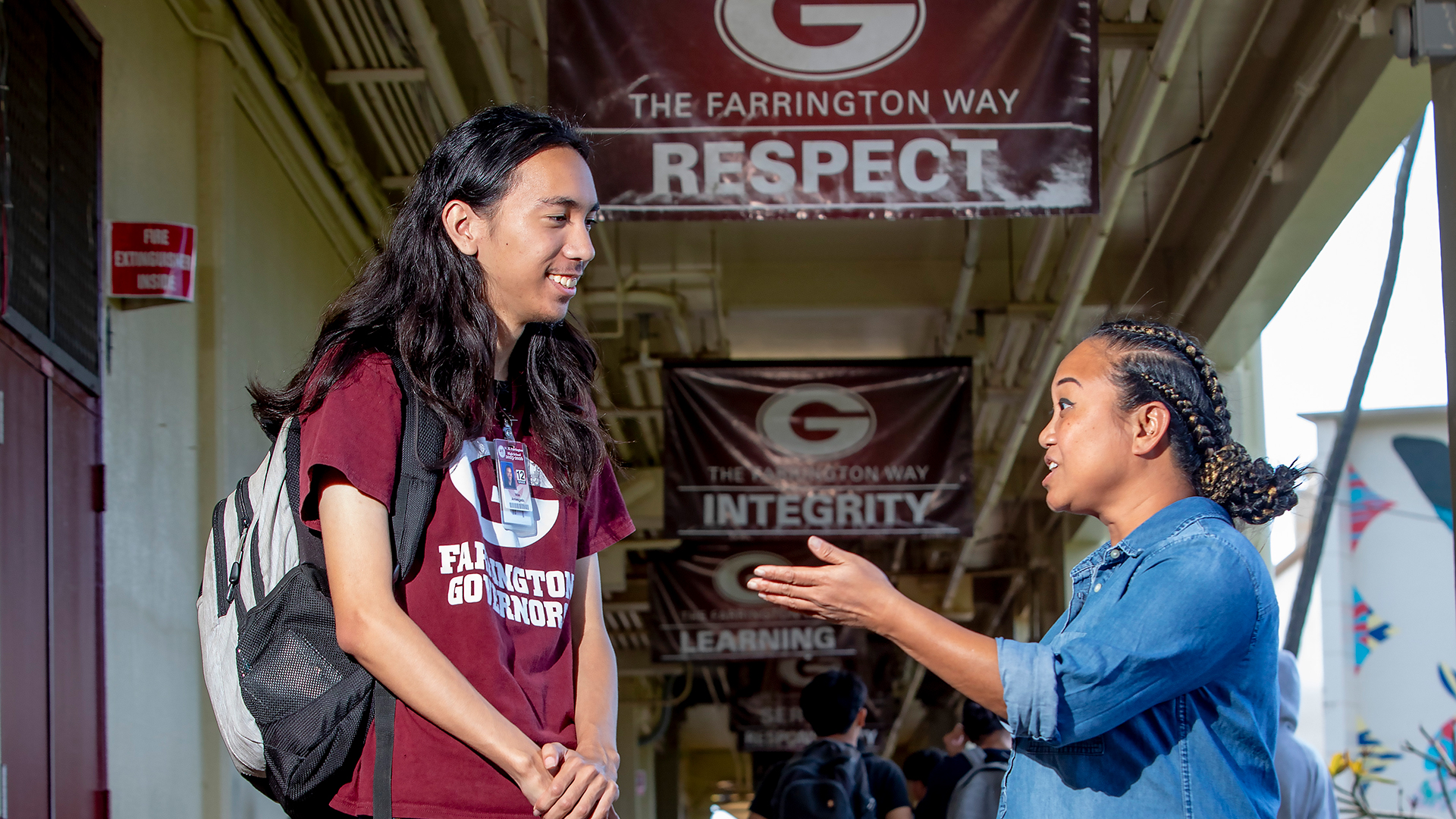
Milne, the student who helped organize the kuleana fair, is not the only Farrington senior using direct admission to pursue the community college route. Noa Arriesgado is using Direct2UH to enroll in the Administration of Justice program at Honolulu Community College. Although admitted to two of Hawaii’s state-run universities—UN-Mānoa and UH-Hilo—Arriesgado chose the community college because it was more affordable. He said his options after high school would have been more limited without Direct2UH “just because I don’t have that level of understanding.”
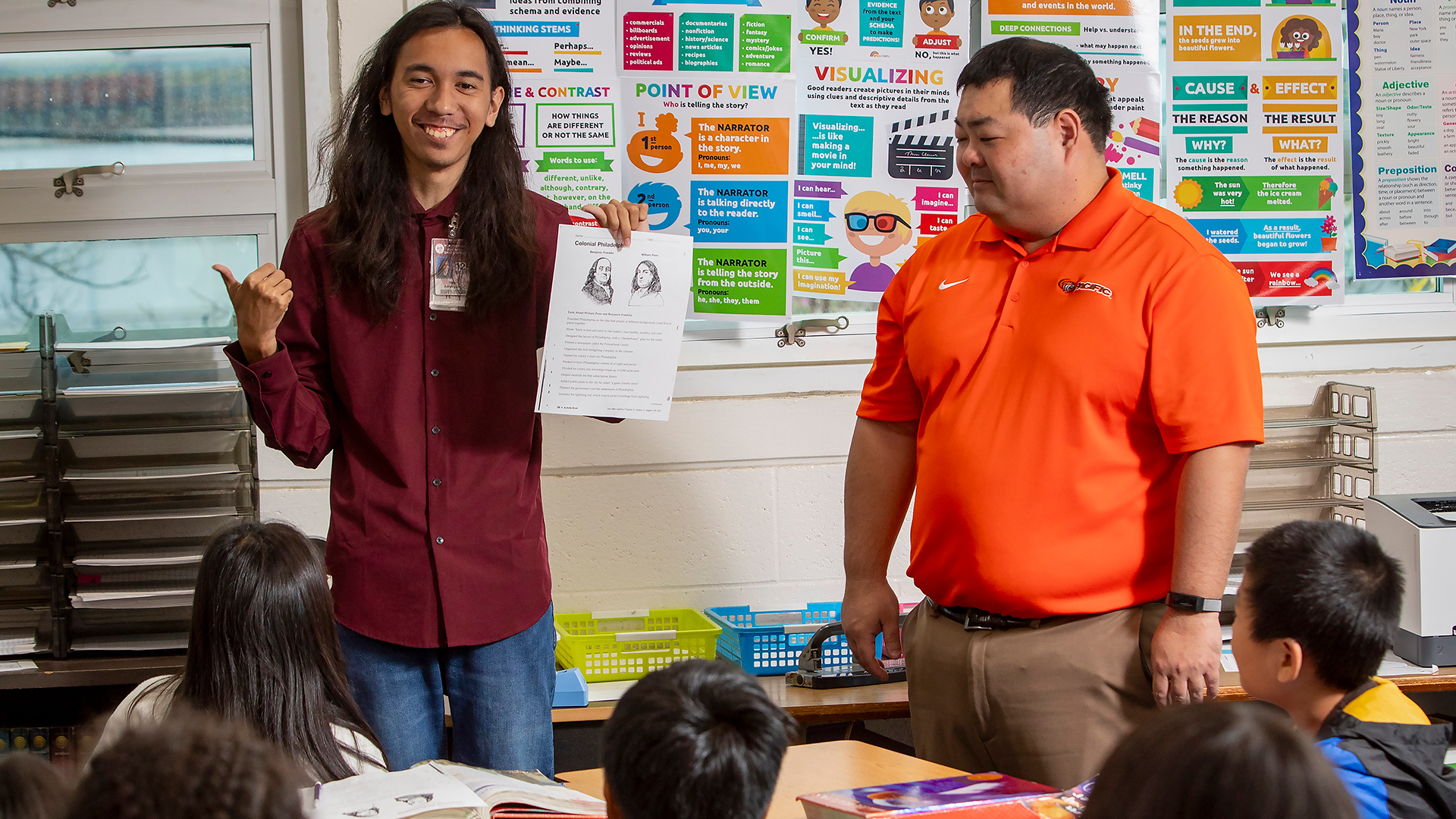
Arriesgado is in Farrington’s public service academy. He volunteers at his old elementary school, serving as an aide to the same teacher he had in fifth grade. He enjoys returning to Kapalama Elementary to help fifth graders transition to middle school. He also works a paid job as a teaching assistant in an after-school program at Kalākaua Middle School. He said Direct2UH simplified the application process.
“It would have been a lot more challenging without it,” he said. “And also, with our counselors here to help us, it was a simple road.”
Writing | Jamaal Abdul-Alim
Editing | David S. Powell and Stephanie Wang
Editorial assistance | Ruth Holladay
Photos | Shawn Spence
Video Reporting: Grace Trahan
Video Production: Michael Jensen
Design | IronGate Creative