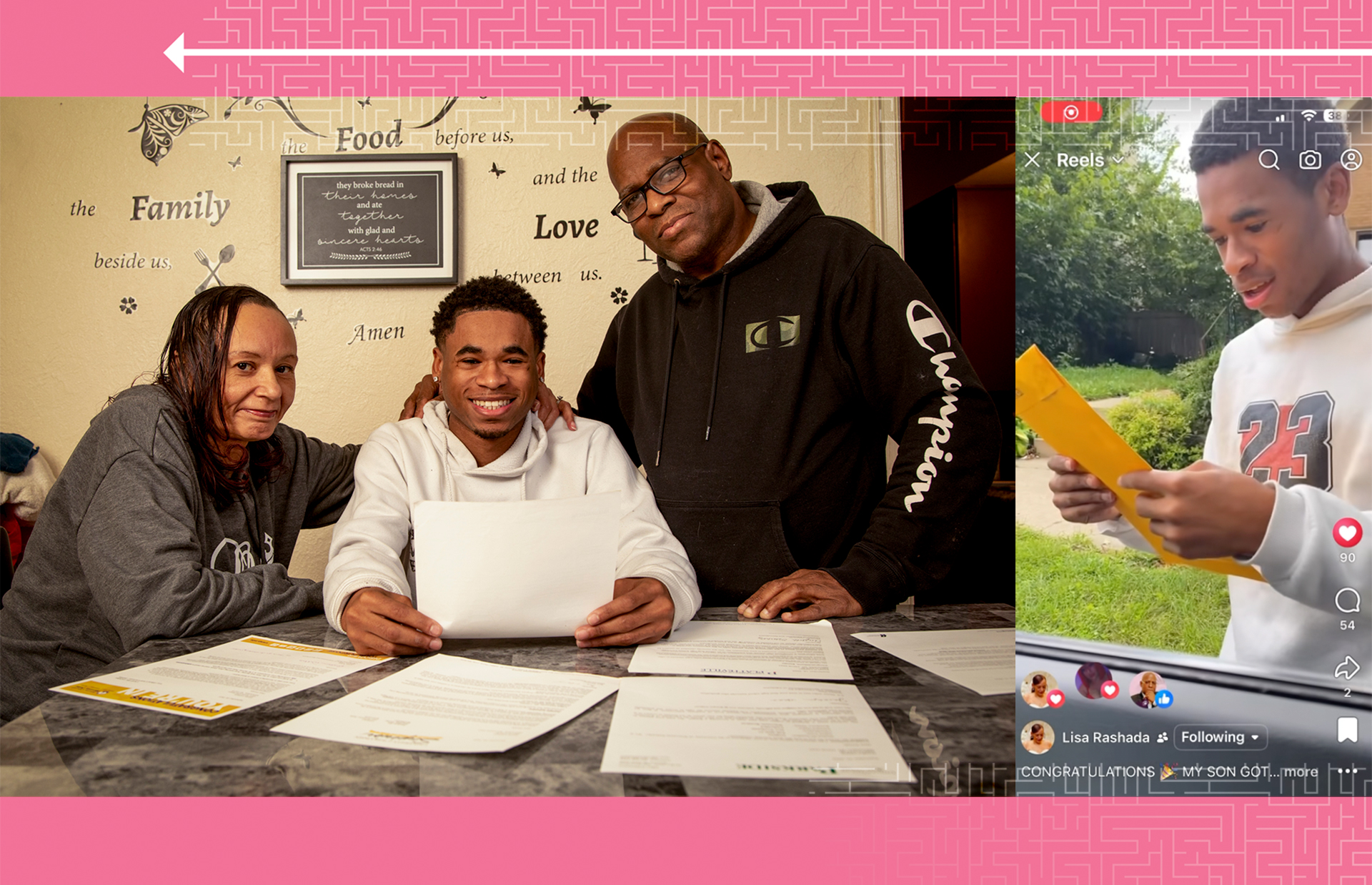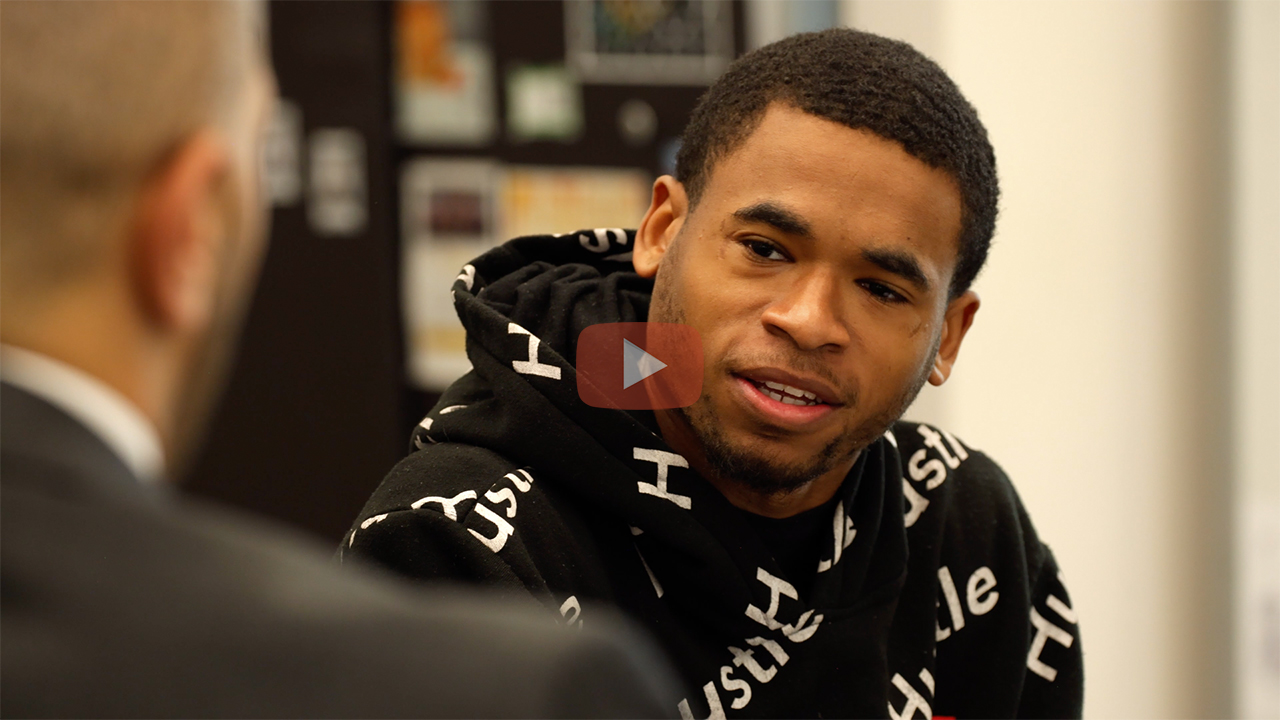
MILWAUKEE—The first time Eiziah Lieblein got a response to a college application, it came in a 9-by-12 envelope emblazoned with a black panther.
“I’m sorry about the lil’ rips,” said Eiziah, an 18-year-old senior at Milwaukee Marshall High School. Showing the letter to a visitor, he explained why the envelope had more rips than the half dozen other acceptance letters he keeps in his blue backpack.
“I was just too excited,” said Lieblein, sporting a black and gray jogging suit with the hood pulled over all but his baby face, bushy eyebrows, and an emerging goatee.
He still recalls his eagerness the day his mother called to let him know he had some mail from the University of Wisconsin-Milwaukee. The panther on the envelope was the university’s mascot, peering over the cellophane address window.
“I wanted to see the letter,” Lieblein said.
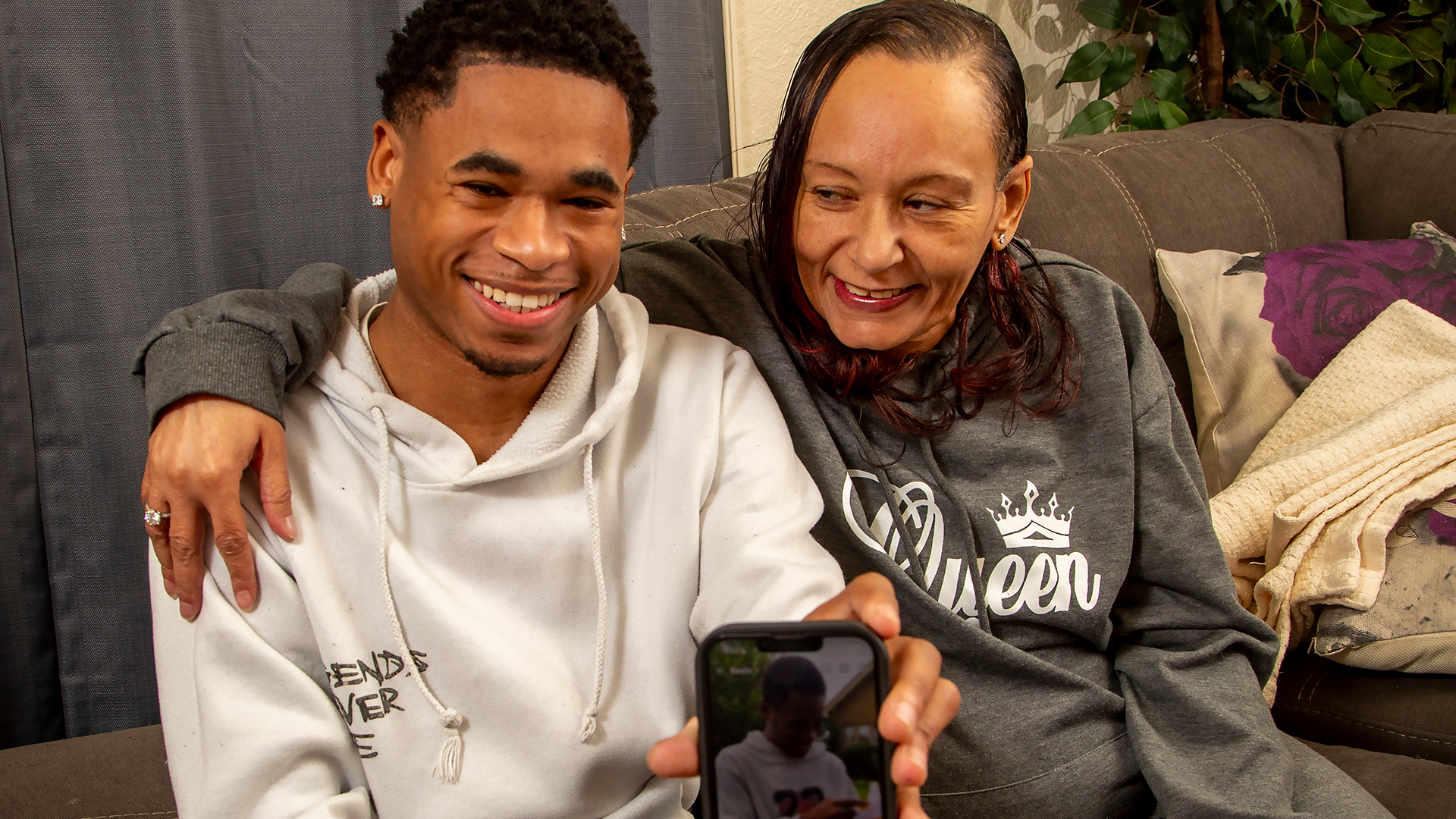
His mother memorialized the moment by making a video of it and posting it online.
“She was too proud of me,” Lieblein recalled.
Not long afterward, he made his own video, this one directed at his peers. In the second video, Lieblein “got on his soapbox” and urged fellow students to do what it takes to go to college, said advisor Molly Weiland, who directs the College & Career Center at Marshall.
In many ways, Lieblein’s excitement mirrors scenes unfolding in homes and schools throughout this Rust Belt city. That’s thanks to Direct Admit Wisconsin, the state’s nearly 2-year-old direct admission program, and its slightly older local companion, Milwaukee Direct Admit. Both programs—part of a growing national trend—are meant to make the college admission process shorter, smoother, and less stressful for students.
Students interviewed here in the fall of 2025 agreed that the program is hassle-free. They like the fact that no essay is required and there is no minimum GPA.
CaMiyah Coad, a senior at South Division High School, highly recommends the direct admission approach. “It is the fastest and easiest way to get into college,” she said.
She hopes to attend a more selective university—perhaps Howard University or Spelman College, two of the nation’s most highly regarded Historically Black Colleges and Universities. But Coad used direct admission as a backup plan in case her dream schools don’t accept her. She said that, while it took weeks to fill out the applications for Howard and Spelman, the direct admission process was much simpler and the outcome more certain.
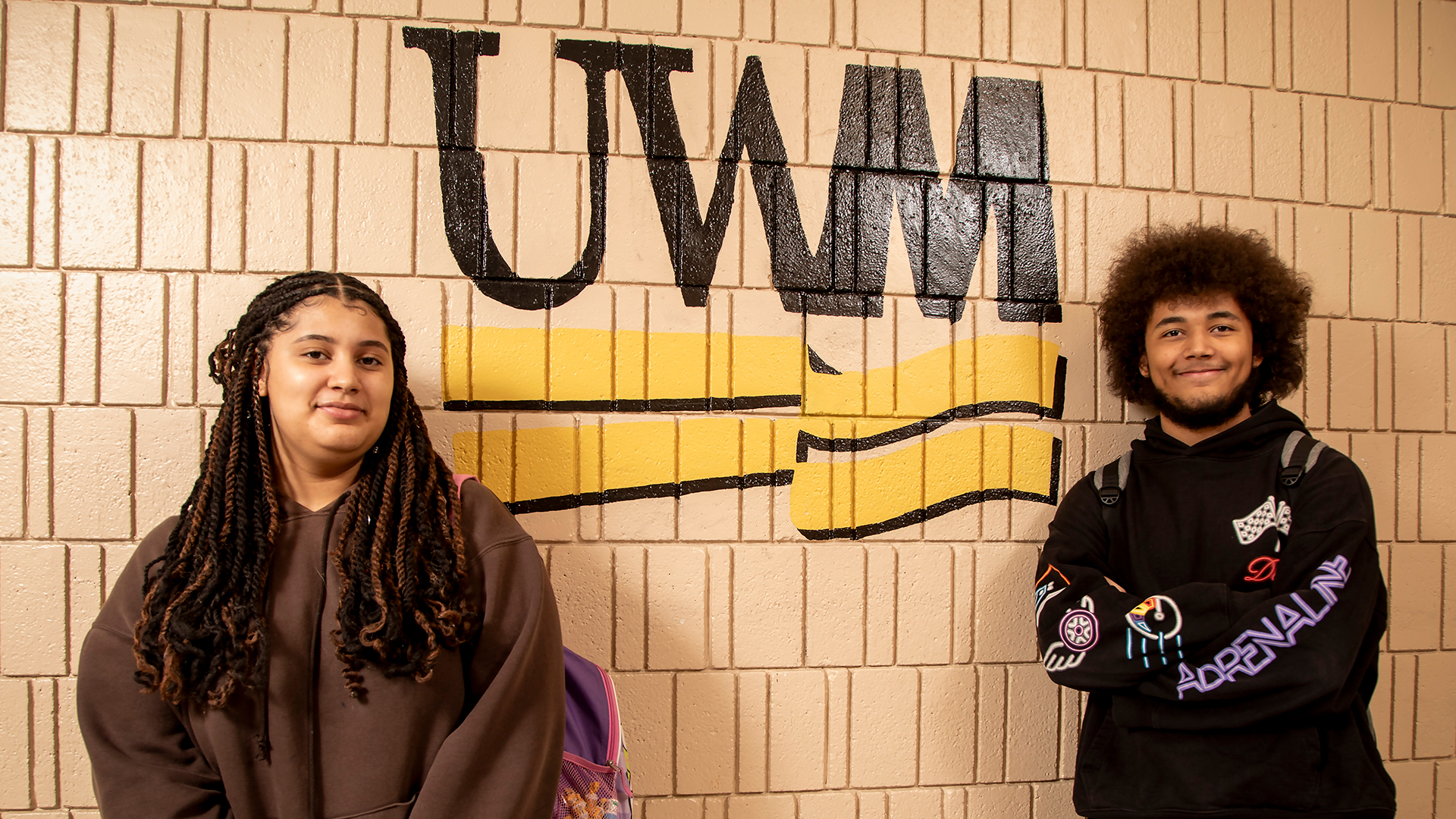

“It’s basically like a sheet of paper you sign saying that you want to apply to all of these colleges,” Coad said. “All it takes is your signature and your parents’ signature, and you get in.”
She was referring to the two-page permission slip for Milwaukee Direct Admit being sent to current juniors in Milwaukee Public Schools. The students must turn in the form by May 1 to begin receiving acceptance letters over the summer and fall. The nine-paragraph form seeks parents’ permission to share their child’s information, such as transcripts and demographic data, with the 10 University of Wisconsin System campuses that participate in the program. Students in the Milwaukee Direct program can also apply to Milwaukee Area Technical College.
The state’s flagship university—UW-Madison, a selective school with an acceptance rate of 43 percent—does not participate in the direct admit program. Nor do UW-Eau Claire or UW-LaCrosse, each with an acceptance rate of just over 70 percent.
Proponents say that, beyond simplifying the application process, direct admission bolsters students’ confidence and lessens doubts they may have about their ability to succeed at the next level.
“It’s been really cool to see students being able to build their confidence from early on so they come into the school year already knowing that they can go to college if they want to go to college,” says Weiland, the Marshall college advisor. “Then we have the rest of the year to build on that success.”
No additional funding is required to operate Milwaukee Direct Admit, according to Ericca Pollack, supervisor of college access at Milwaukee Public Schools.
“It’s a win-win-win across the board because the colleges spend less time supporting specific student applications, we get all transcripts at once behind the scenes, and students opt in, so there’s no additional cost to it,” she said.
In its first year, the 2024-2025 school year, 801 high school juniors completed applications through Milwaukee Direct Admit. That number grew to 1,625 for 2025-26, according to figures provided by Pollack, who said the doubling of program participants was intentional. At the state level, 388 students used Direct Admit Wisconsin during its first year. That number grew to 1,437 this school year. The number of students who actually enrolled in college and persisted through the first year is harder to discern, in part because the program is so new.
He’s still upward bound
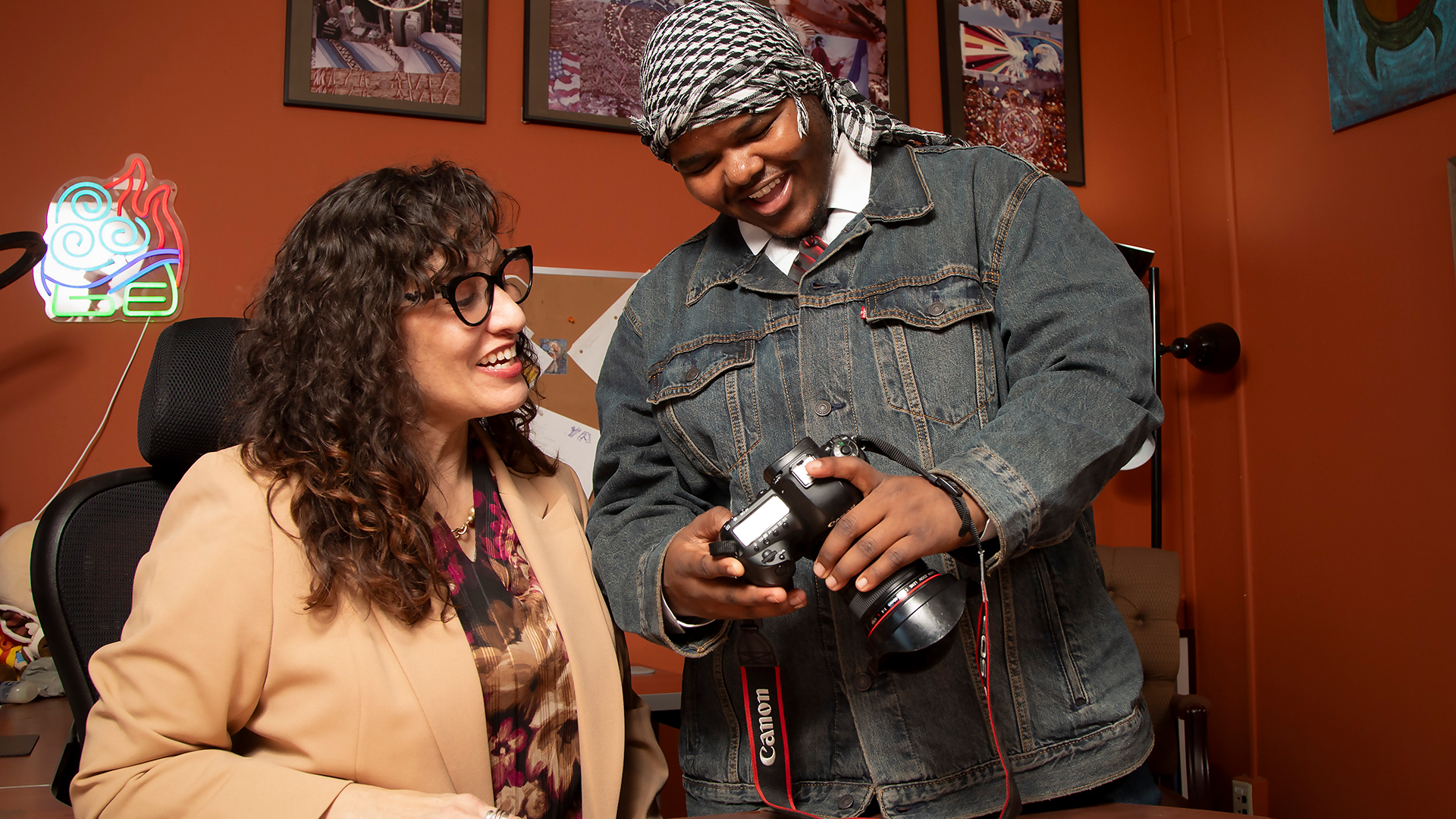
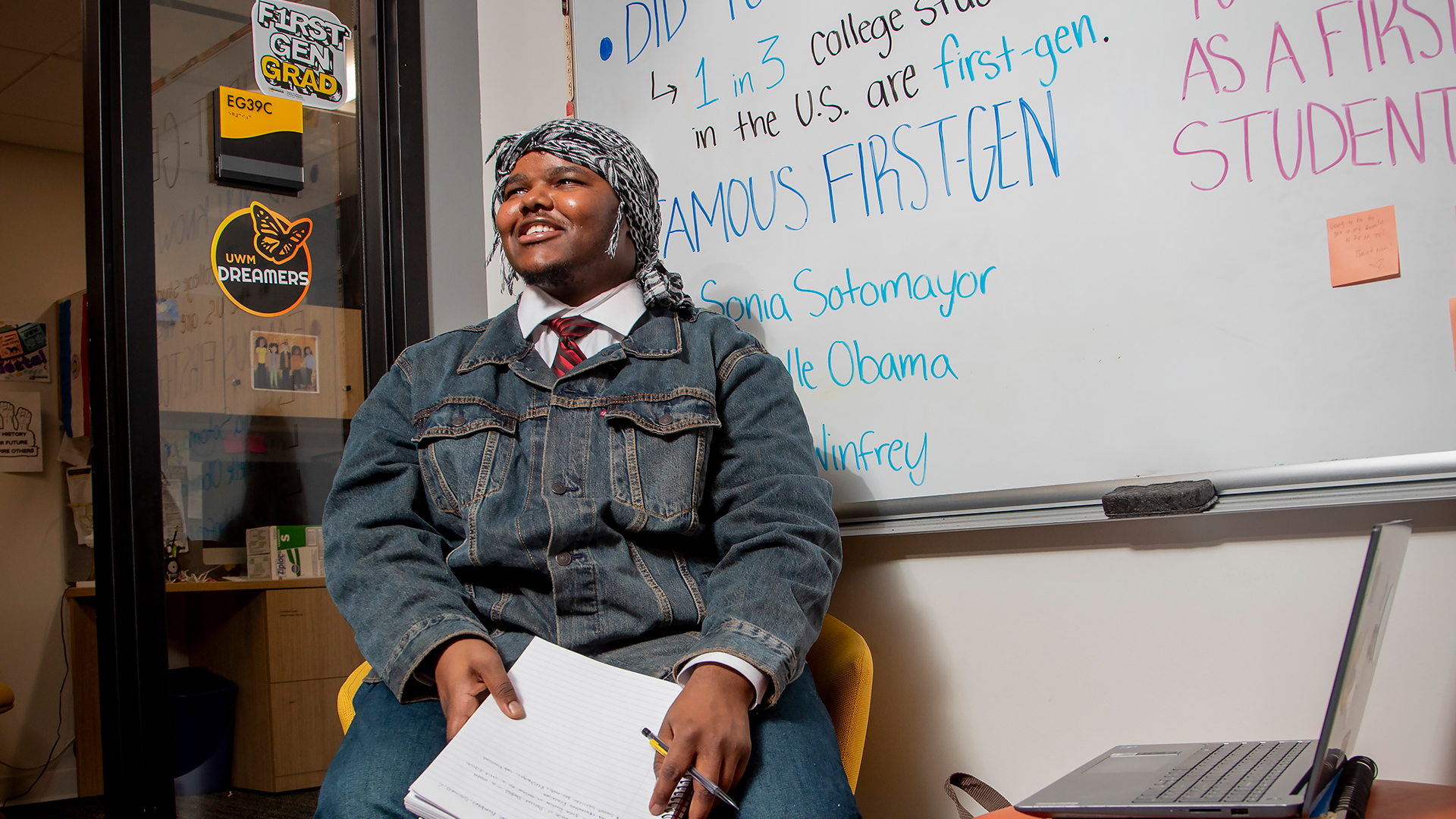
Yakub M. Abdi, a first-year student at the University of Wisconsin-Milwaukee, is among the first wave of Milwaukee Public Schools students admitted through Milwaukee Direct Admit.
Abdi had options beyond those he got through direct admission, but ultimately chose UW-Milwaukee, in part because he was already familiar with the campus. He’d visited there when he participated in Upward Bound, a federally funded program that provides academic guidance and support to ninth- and tenth-graders seeking to become the first in their families to attend college.
Abdi recalls how “official” everything felt when he got college acceptance letters through Milwaukee Direct Admit during his time at Riverside University High School, less than a mile from the UW-Milwaukee campus. Acceptance came with a student ID number and a Gmail address.
“It kind of was exciting,” Abdi recalled. “I told my mom. Every time we would receive emails, she was like: ‘Which one are you going to?’”
Now in his second semester at UW-Milwaukee, Abdi works as a supermarket cashier and as a photographer and marketing coordinator for the university’s Upward Bound program, the same one he participated in as a high schooler. He helps his mother, who works at a local factory, pay the mortgage on a home they recently purchased.
“I’m just like, contributing anything I can at the time,” Abdi said.
At the time of the interview, he was enrolled in developmental math, public health, kinesiology, and English. He was also switching his major from public health to business administration, largely in response to an entrepreneurial urge. He wants to be, in his words, “the boss of myself.”
Eiziah Lieblein, the Milwaukee Marshall High School senior, says there are times when he’s “still scared” about everything college requires. It’s a legitimate concern given that only 52 percent of UW-Milwaukee undergraduates earn a degree. Among Pell Grant recipients, the figure drops to 48 percent.
The fact that students at Marshall are even receiving college acceptance letters is remarkable, much less carrying several of them in their backpacks as Lieblein does. The school does have its share of notable alumni, including award-winning film director George Tillman Jr. and Olympic sprinter Floyd Heard. Still, Marshall, where 88.7 percent of students are Black and 84 percent come from low-income families, lacks a strong college-going culture.
Only 52 percent of its students graduate—virtually none of them are deemed proficient in math, reading, or science. It’s sadly easy to find headlines of Marshall students who’ve been killed. One of the latest victims was an 18-year-old who had only made it to the 10th grade, according to a local news article titled “The Lost Class.” He was shot about 5 a.m. on a Saturday: May 31, 2025.
Marshall also made headlines in 2021 when several students swerved their cars recklessly on the school’s front lawn at the end of the school day. Visitors to the school must pass through a metal detector. This author, himself a 1991 Marshall graduate, knows of two classmates now serving life sentences for murder.
Lieblein once found himself on the wrong track, too. He now admits that, as a ninth grader, he thought school was just “fun and games.”
“I can be honest. I was immature at the time. My head wasn’t where it was now,” Lieblein said. “After my freshman year, I knew I had to lock in because my mom was telling me: ‘If you don’t get your act together, colleges are not gonna want to accept you.’”
Now, in part because of the direct admission program, he has a backpack full of college acceptance letters. The main question he faces now is which school to choose.
Writing | Jamaal Abdul-Alim
Editing | David S. Powell and Stephanie Wang
Editorial assistance | Ruth Holladay
Photos | Shawn Spence
Video Reporting: Grace Trahan
Video Production: Michael Jensen
Design | IronGate Creative