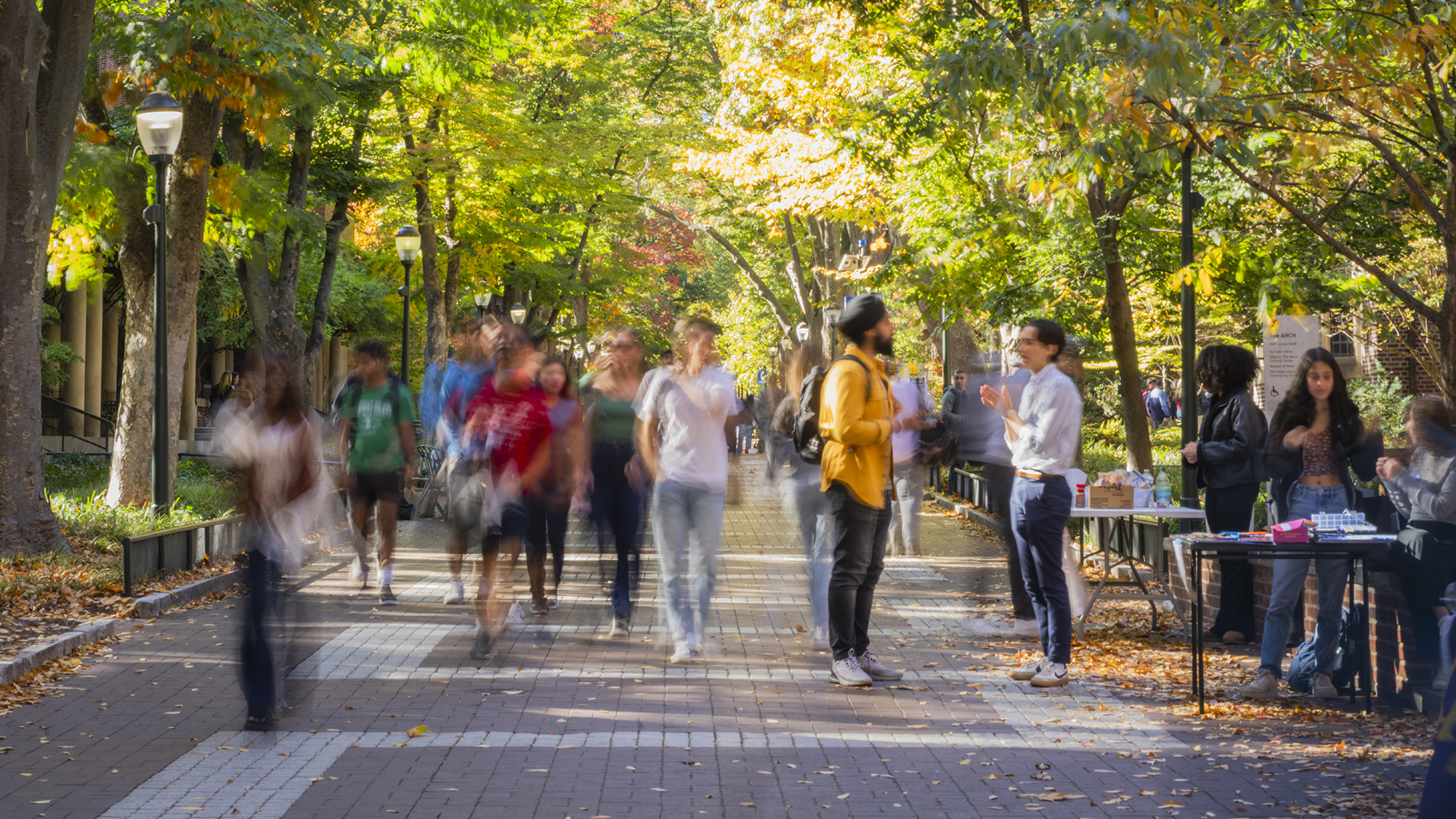
For decades, America has enjoyed an extraordinary competitive advantage that we rarely talk about: many of the world’s most talented people have wanted to study here.
We have gotten so accustomed to this advantage that we seem to assume it will always exist. It won’t, and the warning signs are beginning to flash. International graduate enrollment fell in 2025, and although undergraduate enrollment continued to grow, it did so more slowly than the year before. Application data suggest fewer international students are considering American colleges, too.
According to the National Student Clearinghouse Research Center, international graduate enrollment fell 5.9 percent in fall 2025, a decline of roughly 10,000 students after years of steady growth. International undergraduate enrollment grew 3.2 percent, less than half the growth rate of the previous fall.
Common App reported in August that first-year international applicants fell 10 percent during the 2025-26 application cycle. The decline was remarkably widespread: nine of the 10 countries sending the most international applicants saw decreases. Applications from India fell 15 percent, and those from Nigeria fell 21 percent. Meanwhile, domestic applicants increased 4 percent.
This isn’t just about international students, and it isn’t just about universities. The consequences extend beyond college campuses, reaching American workers, businesses, researchers, students, and communities.
International students support American jobs
International students contributed $42.9 billion to the U.S. economy and supported more than 355,000 American jobs during the 2024-25 academic year, according to NAFSA: Association of International Educators. For every three international students studying in the United States, NAFSA estimates that one U.S. job is created or supported.
That money doesn’t stay inside university gates. International students rent apartments. They eat at restaurants. They buy groceries, furniture, and clothes. They use transportation and other services. Their spending supports jobs throughout the communities where they live.
What happens when fewer of them come?
A recent NAFSA analysis projects that the United States could see as many as 111,000 fewer international students this fall, resulting in as much as $3.4 billion in lost economic activity and putting nearly 40,000 American jobs at risk.
But the bigger loss may be harder to see.
International students are deeply woven into America’s innovation economy. A recent NBER study examining international master’s students and U.S. startups found that greater international enrollment led to more companies being created after graduation. And the effect wasn’t limited to international students themselves: researchers estimate that 30 to 45 percent of the increase came from American graduates who studied alongside them.
In other words, international talent doesn’t simply add to American talent. It can help multiply it.
That matters at a moment when the United States is racing to lead the world in artificial intelligence, biotechnology, advanced manufacturing, and other emerging industries.
The people who come here to study aren’t simply filling seats in classrooms. They are working in laboratories, contributing to discoveries, developing new technologies, and helping create companies.
International students also contribute something harder to quantify but no less important: they help prepare American students for the world they are entering.
Most American college students will never study abroad. But they will graduate into an economy where their colleagues, customers, and competitors span the globe. Learning alongside classmates from other countries gives them experience working with people who bring different experiences, perspectives, and approaches to problem-solving.
America has to compete for talent
International education isn’t only about educating international students.
It is also about educating Americans.
Yet at precisely the moment international interest in American higher education appears to be weakening, new policies and visa uncertainty are making studying here more difficult and less predictable.
The Department of Homeland Security has finalized a rule ending the longstanding “duration of status” approach for international students and exchange visitors. Students will instead be admitted for fixed periods and may need to apply for extensions if their studies take longer. At the same time, prospective students have faced visa delays and other uncertainties about whether they will be able to study and remain in the United States.
The United States can enforce immigration law while also recognizing that delays and uncertainty can come at a cost. And we should also consider whether we’re making it more or less likely that talented students from around the world will choose America.
That question matters more today because students have more high-quality options than they once did.
American colleges and universities remain among the best in the world. But excellence in higher education is no longer concentrated here. The 2027 QS World University Rankings include universities in the United Kingdom, Switzerland, Singapore, Hong Kong, China, and Australia among the world’s top 20, alongside leading U.S. institutions.
That is good for students and good for the world. But it also means America has to compete for talent.
A 2026 OECD analysis of international students in higher education shows just how much that competition has grown. Australia, Canada, France, Germany, the Netherlands, and the United Kingdom have all experienced strong growth in international enrollment over the past decade.
And students don’t choose a country based on university rankings alone. The OECD finds that international students weigh an institution’s quality and reputation alongside the country’s safety, affordability, opportunities to work while studying, visa requirements, career prospects, and their ability to work after graduation.
In other words, talented students aren’t simply asking, Where can I get a great education?
Increasingly, they can get one in many places.
The question is whether they will continue to choose America.
For generations, one of America’s greatest advantages has been its ability to attract ambitious people from around the world, but that advantage is not guaranteed.
International students have more choices than ever. If they increasingly choose to study, conduct research, and build businesses elsewhere, the economic and intellectual benefits will go with them.
That is an American advantage we should be very careful about giving away.