In 2025, the National Center for Education Statistics (NCES) didn’t just get a trim. It got a buzz cut. The office already operated efficiently compared to other federal statistical agencies, but the cuts they experienced were drastic and shortsighted.
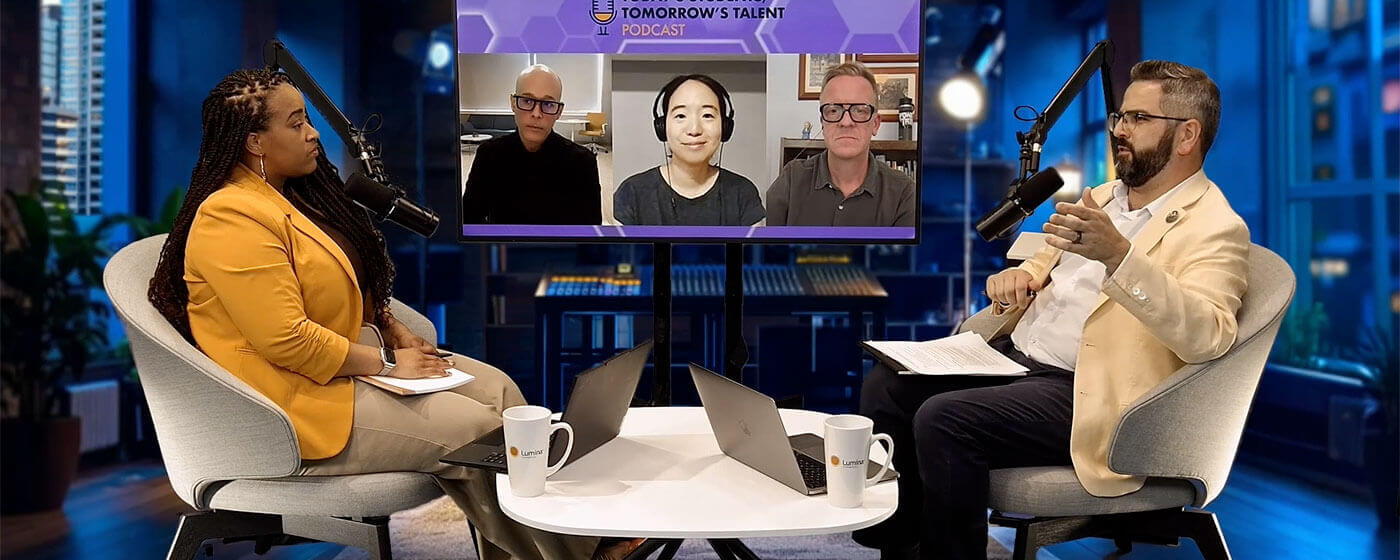
Reflecting on 2025, this show brings back key conversations that are sure to carry over into 2026. This episode revisits a conversation about American prosperity and Lumina’s new goal focused on credentials of value, a discussion about higher education’s role in shaping artificial intelligence, and a review of three states working to redesign admissions systems.
If you listen to the national conversation about higher education, you’d think campuses are ideological battlegrounds, students are disillusioned, and employers are quietly questioning whether degrees still matter.
Morehouse College student Tobias Brown traveled the country to meet leaders—all Black men, like him, at the top of their fields, who could inspire his education and career dreams.
When I graduated from college in 1986, I never once doubted that I would be able to use my degree to pursue professional success. I never wondered if the skills I spent thousands of dollars learning were already obsolete or if they would translate to my first job. I didn't have to ask myself: "If artificial intelligence can do this, then what was the point of going to college?"
Every year, the release of new Stronger Nation data offers a snapshot of where the country stands on education after high school. This year’s release feels different.
In a speech at the Economic Club of Indiana, Lumina Foundation President and CEO Jamie Merisotis explored how reimagining higher education in the age of artificial intelligence can unlock talent and advanced prosperity across Indiana and the nation.
I've spent much of my career working as a college administrator. I’ve held senior roles, carried expansive portfolios, and had titles that critics of higher education increasingly cite as evidence of “administrative bloat.”
New baseline shows 43.6 percent of U.S. adults in the labor force have degrees or other credentials with economic value; the goal is 75 percent by 2040.
Every so often, a new story makes the rounds about how Americans without four-year college degrees can still make six-figure salaries. Take this piece from LendingTree, which highlights elevator installers and repairers—47.5 percent of whom earn more than $100,000 a year without a bachelor’s degree. It’s the kind of story that spreads quickly: hope for the non-college majority, proof that not all good jobs require a diploma.
We know that education is a powerful tool for opportunity. But with rising college costs and more students relying on loans, this pressing question remains: Is college still worth it?
More than 1M short-term workforce credentialing programs are offered today, but little has been done to help adults identify which programs meet industry standards and lead to higher-paying jobs. That’s changing.
Lumina Foundation's Jamie Merisotis offers insight from his decades of experience as an author, policy innovator, and philanthropist on the future of education and work—and his vision for a world where learning and human potential drive progress and opportunity for everyone.
Once a global leader in higher education, the United States now finds itself spending more than nearly all of its peer nations while delivering outcomes that fall increasingly short of expectations.
Few aspects of modern life are as closely scrutinized as higher education, and no wonder: Though most Americans believe that a college degree leads to better jobs, many also think it costs too much and may not be worth the time and money.
The announcement today of Humanity AI marks one of the most ambitious philanthropic responses yet to the disruptive rise of artificial intelligence. Backed by an initial $500 million in commitments, this five-year collaborative seeks nothing less than to rebalance the trajectory of artificial intelligence development, shifting power toward the public good.
Higher education is navigating unprecedented times marked by misinformation, public skepticism, and structural change. The State Higher Education Executive Officers Association (SHEEO) meeting is critical for uncovering important research and practical strategies to help institutions maneuver through this shifting landscape.
Lumina Foundation, CollegeAPP, and StrategyForward Advisors have joined to launch the Rural Community College Adult Learner Engagement initiative, supporting a cohort of rural colleges in strengthening their outreach to attract and enroll adults.
Colleges eager to help adult learners—especially Black, Hispanic and Latino, and Native American adults who have historically been left behind—know this goal requires more than surface-level tweaks. It demands deep, sustained, and mission-driven institutional change.
Artificial intelligence, the fastest-growing force of change in society today, has captured the imagination and concern of leaders in fields such as education, economics, defense—and even religion.
Hear insights from a nationwide movement. The live podcast includes real stories from the field illuminating how change happens—and where it’s heading.
This summer, the National Student Clearinghouse issued a new report with mixed news. While many states have made progress in re-enrolling people who have some college credit but have yet to earn their credential, the total population of U.S. adults in this group has grown. Now, over 43 million Americans have some college credit but stopped out before they could complete their first credential.
Colleges and universities are doing a better job lately explaining the value of their degrees, and increasingly they're getting important help in making that case.